 EN
EN


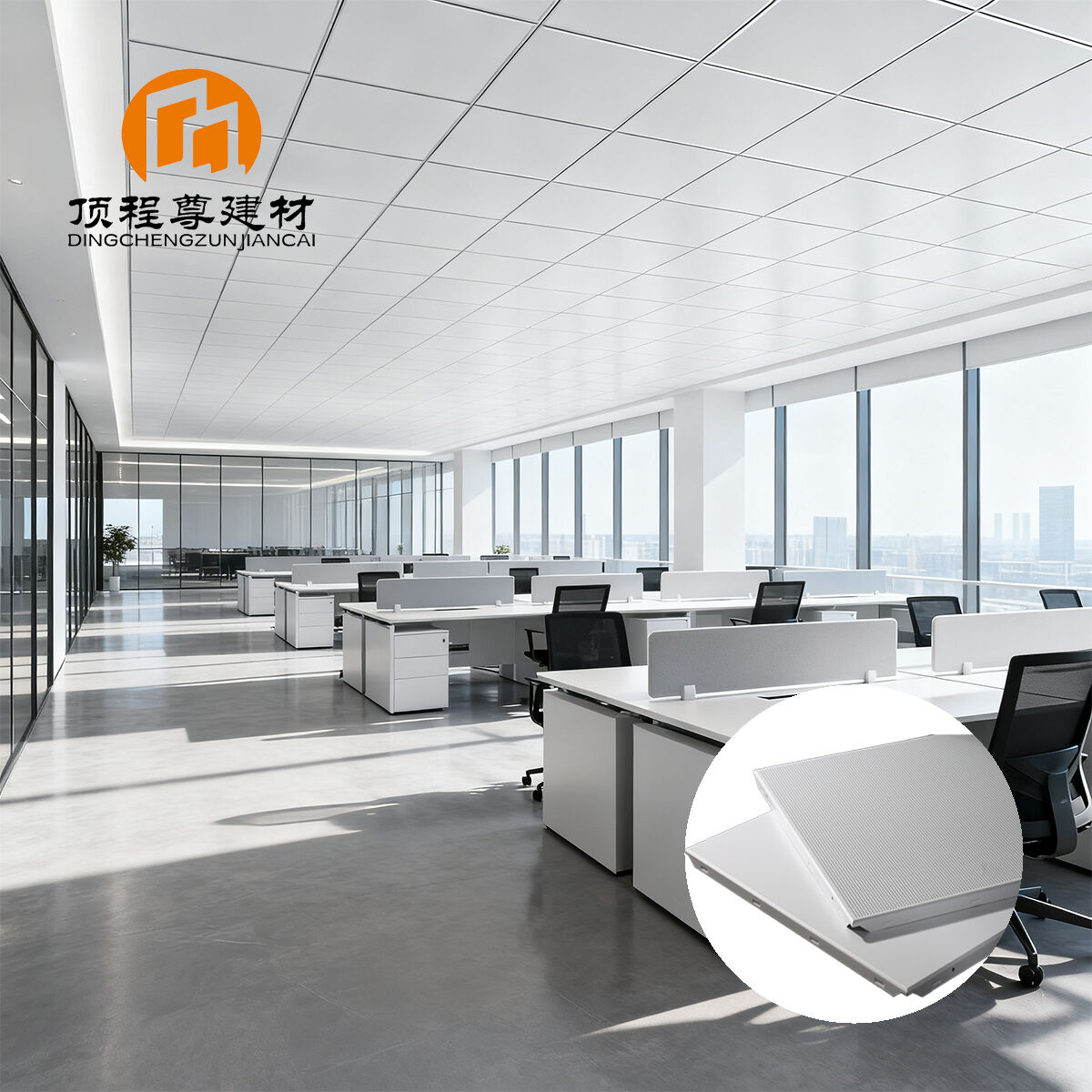
In the global architectural decoration materials sector, premium aluminum ceilings have become the core choice for commercial landmarks and high-end residences due to their lightweight, high-strength, eco-friendly, and durable properties. This article synthesizes authoritative scholarly arguments and verified lower-limit data from Europe, America, and the Middle East to dissect the production fundamentals of A1060 pure aluminum and A3003 aluminum-manganese alloy substrates, providing scientific guidance for global procurement.
I. Raw Material Selection: Core Standards and Testing for Two Base Materials
Professor Konstantinos Daniel Tsavdaridis from the Department of Engineering at City, University of London emphasized in Modern Optimization Methods for Aluminum Profile Design: “The long-term stability of aluminum ceilings is directly linked to the alloy composition and impurity control of the base material. Substandard raw material purity can lead to subsequent deformation and coating peeling.” Dr. Sarah Chen, Materials Science Specialist at the Aluminum Association (AA), adds: “The high-purity characteristics of A1060 and the alloy advantages of A3003 address core requirements across diverse applications.”
(I) Core Raw Material Selection Criteria
Base Material ParametersA3003 Aluminum-Manganese Alloy: Manganese content 1.0%-1.5%, tensile strength 180MPa, impurities ≤0.15%. Offers 40% higher deformation resistance than A1060 with superior formability, weldability, and corrosion resistance.A1060 Pure Aluminum: Aluminum content ≥99.6%, excellent formability and elongation, suitable for indoor low-load, cost-effective applications.
Coating Standards Fluorocarbon coating with PVDF content ≥70%, withstands 2000 hours of accelerated outdoor aging. - Powder coating with VOC emissions ≤0.03g/L, significantly outperforming the industry average of 0.08g/L
(II) Rigorous Testing Process
Both base materials undergo three inspections:
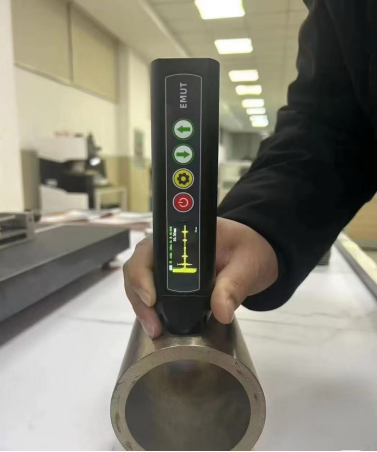
Spectrometer composition testing (error ≤0.01%)
Thickness calibration (deviation ≤±0.02mm)
72-hour salt spray test (no oxidation spots)
Professor Tsavdaridis emphasized: “Archiving test data is the core of performance assurance.”
II. Production Process: Precision Control in Differentiated Processing
Prof. Michael Schmidt from the Department of Materials Engineering at RWTH Aachen University confirmed in his research on metal surface pretreatment technology: “Substrate properties dictate process parameters, and differentiated pretreatment is key to coating stability.
(1) Pretreatment: Tailoring Coating Substrates for Different Substrates
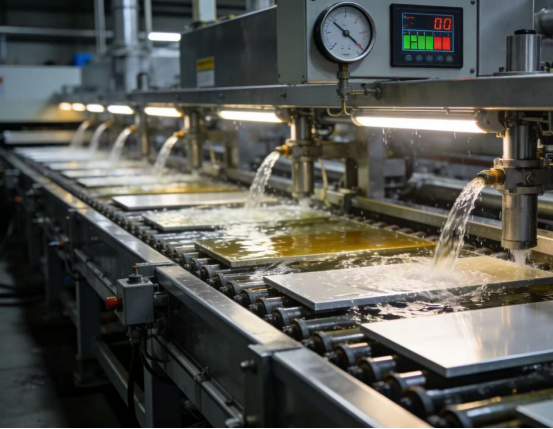
• A3003: Phosphating temperature 50-60°C, immersion 8-10 minutes, phosphating layer 3-5μm, coating adhesion ≥1.5MPa.
• A1060: Purer material composition; pretreatment temperature 45-55°C, phosphating layer 3μm, adhesion ≥1.2MPa. Avoid over-treatment to prevent property degradation.
• Utilize fully automated pretreatment lines with real-time monitoring of cleaning solution pH (7.5-8.5) to ensure uniform processing.
(II) Forming Process: Precision and Characteristic Synergy
CNC bending tolerance ≤ ±0.1mm, turret punch press deviation ≤ ±0.05mm. A3003 withstands greater bending forces, accommodating complex irregular shapes; A1060 achieves 20% higher forming efficiency, with 600×600mm standard square plate flatness tolerance ≤ 1.5mm—exceeding industry standards.
(III) Surface Treatment and Finished Product Inspection
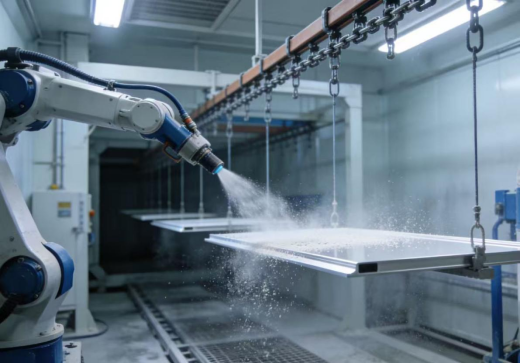
1. Surface Processes: Electrostatic powder coating voltage 60-80kV, coating thickness 60-80μm, 100% edge coverage; fluorocarbon triple-coat process with coating hardness ≥3H, no scratches under 500g load. Spray schemes optimized for both substrate characteristics enhance adhesion stability.
2. Finished Product Inspection: Both achieve Class A1 fire resistance (fire endurance ≥90 minutes) and TVOC emissions ≤0.05mg/m³. A3003 undergoes additional weather resistance testing (ΔE ≤1.2 after 1000 hours UV exposure), while A1060 focuses on machining precision. ≥3% of each batch is randomly inspected, with a factory pass rate ≥99.3%.
III. Performance Comparison: Data Demonstrates Core Advantages
Performance comparison between two aluminum ceiling base materials and traditional materials (data represents minimum test values)
Dr. Sarah Chen noted: “The annual cost of A1060 is 65% that of standard materials, while A3003 is only 60%, demonstrating significant long-term benefits.”
Whether you need the cost-effective A1060 indoor solution or the highly weather-resistant A3003 outdoor product, Guangzhou Dingchengzun Building Materials specializes in exporting aluminum ceiling and curtain wall materials. We offer a one-stop service featuring professional design team recommendations, certified accessories, and installation guidance. Contact us now for your customized solution!
| Performance Specifications | Premium Aluminum Ceiling (A1060) | Premium Aluminum Ceiling (A3003) | Mineral Wool Ceiling | Gypsum Ceiling |
| Service Life (Years) | 15-20 | 18-25 | 8-12 | 6-10 |
| Flexural Strength (MPa) | ≥80 | ≥150 | 15-25 | 20-30 |
| Recyclability Rate | ≥60% | ≥65% | ≤38% | ≤18% |
| Humidity Tolerance Range | 30%-85% | 25% -90% | 35%-80% | 45%-70% |