 EN
EN


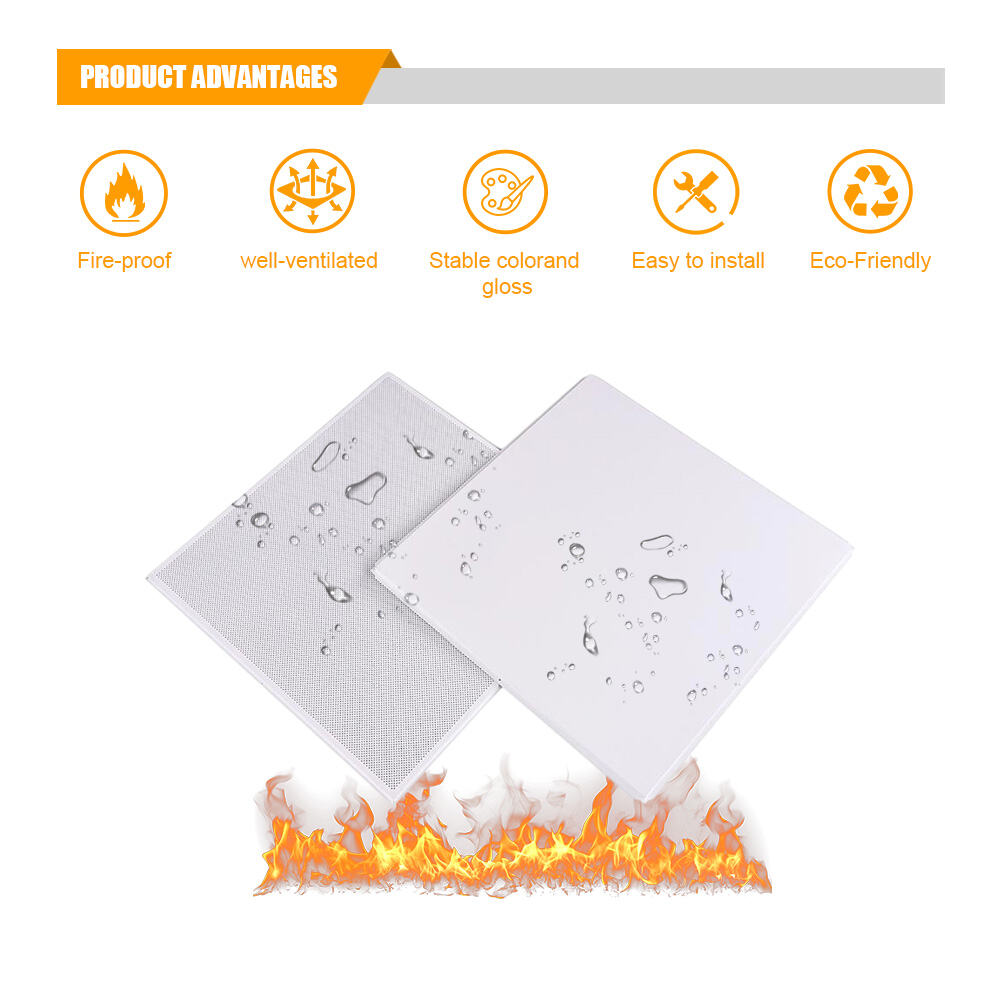
When a commercial project targets LEED certification, BREEAM, or a national green building rating scheme, the specification stage often hits the same wall: architects and contractors are asked to submit supporting documentation for every major material — and ceiling systems are no exception. Too often, suppliers respond with generic claims like "our products are eco-friendly" without anything a project team can actually attach to a submittal package.
This guide lays out, plainly, what documentation aluminum ceiling manufacturers can realistically provide for LEED MR, EA, and IEQ credits, what that documentation can support in a certification process, and where the gaps typically are — using our own current certifications as a working example rather than industry generalities.
Does an Aluminum Ceiling Itself Earn LEED Points?
Before going further, it's worth being direct about one thing: a ceiling panel does not "earn" LEED points by itself. Points are awarded to the project by the U.S. Green Building Council (USGBC), based on documentation the project team compiles and submits. A manufacturer's role is to supply accurate, verifiable data that a project team can reference — nothing more, nothing less. The same applies under BREEAM, which is more commonly referenced across the UK, Europe, and parts of the Middle East.
The documentation that typically matters for ceiling materials falls into a few categories:
- Material composition and traceability — what alloy is used, and where it comes from
- Environmental management certification — how the manufacturing process is governed (relevant to LEED's Materials & Resources category)
- Fire and safety performance — certified ratings against a recognized standard (relevant to Indoor Environmental Quality)
- Health and safety compliance — both for occupants of the building and for workers in the supply chain
- Energy-related performance data — where available, and clearly marked when it is not (relevant to Energy & Atmosphere)
What We Currently Hold — Mapped to LEED Credit Categories
Rather than listing aspirational claims, here is what we currently certify and produce with, mapped directly to the LEED category it's most relevant to:
| LEED Credit Category | Document We Hold | What It Supports |
|---|---|---|
| Materials & Resources (MR) | ISO 14001 | Governs manufacturing environmental impact; supports supplier-level sourcing documentation (not a certified recycled-content percentage) |
| Indoor Environmental Quality (IEQ) | GB A2 fire rating (Chinese national standard) | Non-combustible classification; certificate number available on request |
| Energy & Atmosphere (EA) | Thermal/reflectivity testing — available on request | Not pre-completed; commissioned per project when required |
| Supplier qualification (supports MR & general submittal credibility) | ISO 9001, ISO 45001, CE marking | Quality management, worker health & safety, EU/Middle East export compliance |
Our primary alloys are AA1100 (used across our clip-in, lay-in, baffle, and grid ceiling product lines) and AA3003 (used in our aluminum veneer and curtain wall products).
What we do not currently have, stated clearly rather than implied otherwise:
- A third-party Environmental Product Declaration (EPD)
- A certified recycled content percentage (post-consumer or post-industrial) for either alloy
- Independent VOC emission test reports
- A completed Solar Reflectance Index (SRI) or thermal performance report — testing is available on request but is typically only commissioned once a specific project requires it
We'd rather a project team know this upfront than discover a gap mid-submittal.
Beyond LEED: BREEAM and Local Green Building Standards
LEED is widely referenced, but it isn't the only framework project teams work against — particularly in our core export markets across the Middle East and Southeast Asia, where BREEAM or a national green building rating scheme is often the applicable standard. The underlying material properties — alloy type, fire rating, ISO-certified management systems — are the same regardless of which framework a project happens to follow; only the credit naming and documentation format change.
A Practical Checklist for Specifying Ceiling Materials
If you're compiling a submittal package and evaluating ceiling suppliers, these are the questions worth asking before, not after, placing an order:
1. Is there a third-party EPD? If not, what alternative documentation (alloy spec sheets, mill certificates) can be provided instead?
2. What is the certified recycled content, and is it documented or estimated? Be cautious of suppliers who quote a percentage without a report behind it.
3. What fire rating standard applies, and is the certificate number available? Standards differ by region (GB, EN 13501, ASTM E84) — confirm which one your project's authority requires.
4. Has VOC emission testing been done, and by whom? If not done, ask whether it can be commissioned within the project timeline.
5. What management system certifications does the manufacturer hold (ISO 9001 / 14001 / 45001)? These don't directly equal material-level credits but support supplier-qualification documentation in many submittals.
6. Can thermal/reflectivity testing be commissioned if the project requires it, and on what timeline? Some performance data is only worth generating per-project rather than maintained generically.
Where Our Own Projects Stand
We've supplied aluminum ceiling systems to hospital and transit projects — including Dongshan Hospital in Meizhou and the Second People's Hospital of Foshan — where the governing requirements were national fire safety codes, hospital-grade hygiene standards, and the technical criteria tied to China's Luban Prize evaluation, rather than a formal LEED or BREEAM certification process. We're noting that distinction directly rather than implying a green-building certification that didn't apply to those specific projects. For more on how aluminum ceiling lifespan factors into long-term project costs, see our related article on the long-term value of aluminum ceilings.
What We Can Offer Your Submittal
If your project's documentation requirements call for it, we can provide:
- Current certificates: ISO 9001, ISO 14001, ISO 45001, CE marking, GB A2 fire rating
- Full alloy and product specification sheets for AA1100 and AA3003 product lines
- Commissioned testing (EPD, VOC, thermal performance) where a specific project's timeline and budget allow
If your submittal needs something we don't currently have on file, tell us the requirement and we'll confirm honestly whether it can be delivered within your timeline — rather than promising a number we can't back up.