 EN
EN


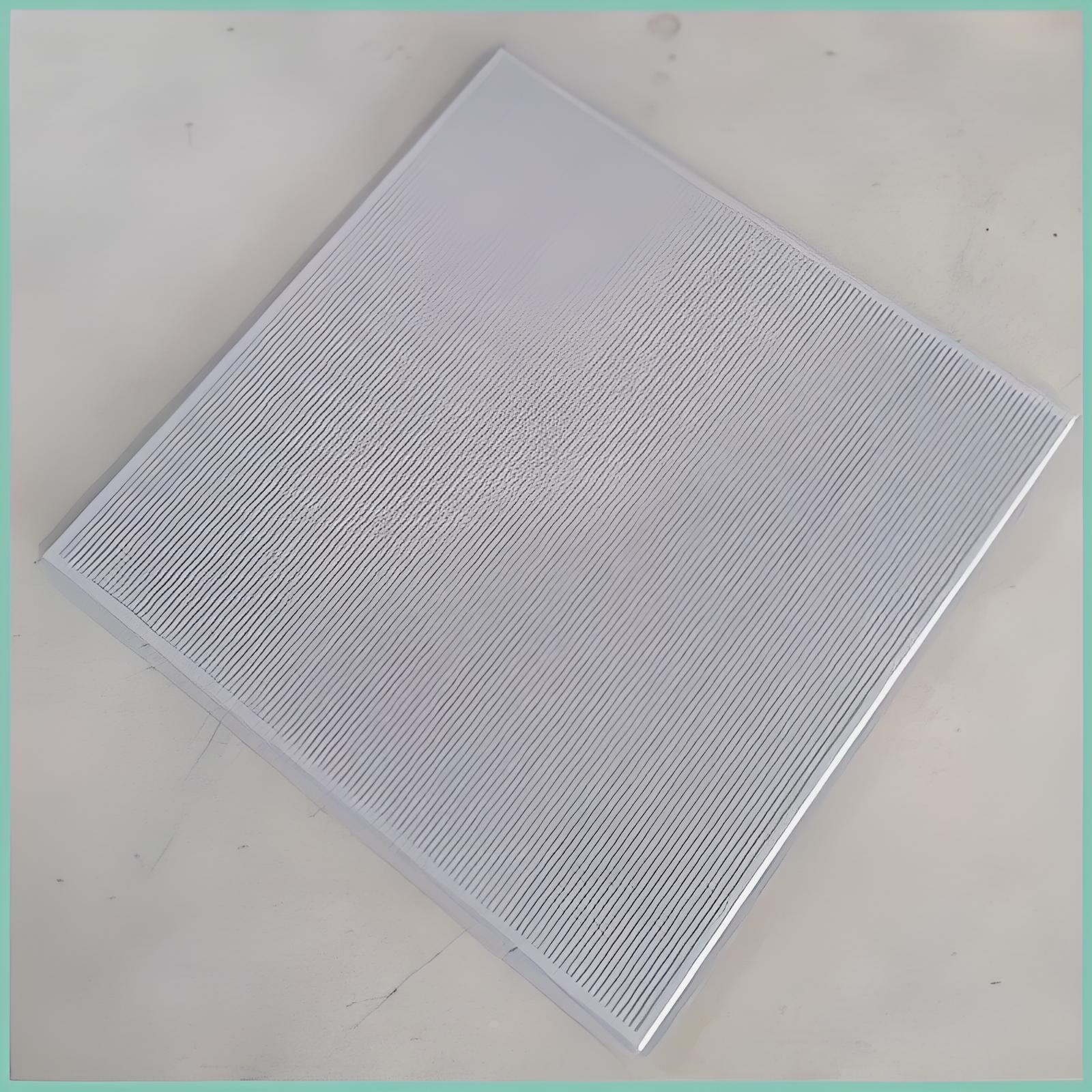
A 20-Year Total Cost of Ownership Breakdown for Commercial Projects
Written by Andy, Founder, Dingchengzun
A procurement manager comparing two quotes for a hospital renovation sees gypsum board ceiling panels priced at a fraction of the aluminum alternative. On paper, the decision looks simple — gypsum board can run as low as ¥6–20 per m² (about $1–3 USD), while aluminum ceiling systems typically range from ¥30–100 per m² (about $4–15 USD) depending on panel type and finish. Three to five times the cost looks hard to justify at first glance.
Five years later, the gypsum ceiling in the corridor near the sterilization room has visible water staining, sections have started to sag, and the maintenance team is requesting budget for a partial repaint. Meanwhile, a comparable aluminum ceiling installed in a similarly demanding environment — the Second People's Hospital of Foshan — has gone five years without a single maintenance issue.
This is the problem with comparing ceiling materials on unit price alone. The purchase price is only one line in a much longer cost story. This article walks through a practical framework — Total Cost of Ownership (TCO) — for comparing aluminum and gypsum board ceilings over a realistic 20-year service period, so you can apply the same logic to your own project numbers rather than relying on a generic "which is better" answer.
What Is Total Cost of Ownership (TCO), and Why Ceiling Materials Need This Lens
Total Cost of Ownership looks beyond the purchase price to capture every cost a material generates across its service life. For suspended ceiling systems, that means four cost categories:
- Initial cost — materials, labor, and any preparatory work (e.g., painting, jointing, finishing)
- Maintenance cost — routine cleaning, moisture treatment, periodic repainting
- Repair and replacement cost — fixing or replacing damaged sections during the building's life
- Indirect cost — downtime, business disruption, or operational impact during repair work (particularly relevant for hospitals, airports, and transit hubs that cannot easily close for renovation)
A material that looks cheaper on day one can become significantly more expensive once these four categories are added up over a 20-year horizon — especially in environments where one material is far more exposed to the conditions that shorten its life.
1. Initial Installation Cost
Gypsum board ceiling systems carry a lower material cost per square meter, but the installation process is more labor- and time-intensive: boards must be cut, fixed, taped, jointed, sanded, and painted before the ceiling is considered finished. This "wet works" process also requires drying time, which extends the project schedule.
Aluminum ceiling systems (clip-in, lay-in, or baffle types) use a modular, dry-installation method. Panels are pre-finished at the factory and simply clipped or laid into a grid, which significantly shortens on-site labor time.
| Cost factor | Gypsum Board Ceiling | Aluminum Ceiling |
|---|---|---|
| Material cost per m² (installed) | ¥6–20 (~$1–3) | ¥30–100 (~$4–15) |
| Installation method | Wet works (cut, joint, sand, paint) | Dry, modular (clip-in / lay-in) |
| Finishing required after install | Yes — painting required | No — factory-finished |
| Typical project lead time | Longer (drying/curing time required) | Shorter — Dingchengzun delivers design proposals within 48 hours and project completion within 2 weeks |
At face value, gypsum board costs roughly one-third to one-fifth of aluminum. The remaining sections of this article look at what happens to that gap over the following 20 years.
2. Maintenance Cost (Years 1–10)
This is where the cost gap typically begins to narrow — or reverse — especially in humid or high-traffic environments.
Gypsum board challenges:
- Susceptible to mold and discoloration in humid conditions
- Can sag or show joint cracking if exposed to moisture or building movement over time
- Often requires repainting every 5–7 years in commercial settings to maintain appearance
- Difficult to disinfect thoroughly — a relevant concern in healthcare environments
Aluminum ceiling advantages:
- Factory-applied finish resists moisture and corrosion without repainting
- Smooth, non-porous surface supports easy cleaning and disinfection
- A2 fire-rated aluminum alloy (1100/3003 series) maintains performance without ongoing treatment
Real project reference: At the Second People's Hospital of Foshan — a project where Dingchengzun supplied the architectural ceiling and curtain wall systems — the installed aluminum ceiling has remained free of maintenance issues for five years in service, in a hospital environment where humidity control, hygiene, and continuous operation are all demanding requirements.
3. Repair and Replacement Cost
When a section of gypsum board ceiling is damaged — water leak, impact damage, or wiring access — repair usually means cutting out and replacing an entire panel or section, followed by re-painting. Matching the paint finish and texture to the surrounding, already-aged ceiling is difficult, and color mismatch is a common visible result.
Aluminum ceiling systems, particularly clip-in and lay-in types, are modular by design. A damaged or discolored panel can be removed and replaced individually without affecting the surrounding ceiling, and without repainting.
4. Service Life: Why the Comparison Depends on the Environment
This is the most important — and most commonly oversimplified — part of the comparison. Gypsum board's actual service life varies enormously depending on conditions:
- In dry, climate-controlled indoor environments, gypsum board can perform well for decades. Industry sources, including the Gypsum Association, note that gypsum panel products have a long service life and low maintenance needs under stable, low-moisture conditions.
- In high-humidity, coastal, or high-traffic commercial environments — exactly the conditions found in hospitals, airports, transit stations, and food service facilities — multiple industry sources note that gypsum ceiling life can fall to roughly 10–20 years, with visible degradation (warping, staining, joint failure) appearing well before that point if moisture exposure is frequent.
Aluminum ceiling systems are commonly rated for 25+ years of service life under normal commercial conditions, and their corrosion-resistant aluminum alloy construction means performance does not meaningfully degrade in the high-humidity, high-traffic settings where gypsum board is most at risk.
The practical takeaway: for a dry, low-traffic office environment, gypsum board's lifespan disadvantage is real but modest. For hospitals, airports, transit hubs, and other demanding environments — the core project types Dingchengzun serves — the lifespan and maintenance gap is substantially larger, which is also where the TCO advantage of aluminum is most significant.
5. The 20-Year TCO Comparison
Bringing the cost categories together produces a clearer long-term picture than comparing unit prices alone. The table below illustrates the pattern using the pricing data above; exact totals will vary by project scale, region, and environmental conditions.
| Cost Category | Gypsum Board Ceiling | Aluminum Ceiling |
|---|---|---|
| Initial cost (Year 0, per m²) | ¥6–20 (~$1–3) | ¥30–100 (~$4–15) |
| Repainting / surface maintenance (every 5–7 years) | Recurring cost | None required |
| Typical service life in high-humidity/high-traffic settings | ~10–20 years | 25+ years |
| Major repair/replacement within 20 years | Likely at least once | Not typically required |
| Demonstrated real-world performance | — | 5 years, zero maintenance issues (Foshan Second People's Hospital) |
For a project-specific cost estimate based on your building type, region, and environmental conditions, request a free quote — our team responds within 24 hours.
6. Where the Cost Gap Matters Most
The TCO gap between materials is not uniform across project types:
- High-humidity, high-traffic environments — hospitals, airports, subway stations — show the widest cost gap, since gypsum board degrades faster in these conditions and disruption costs during repair are highest. See related coverage: Why Hospitals Prefer Aluminum Ceiling Systems and Aluminum Baffle Ceiling Solutions for Modern Airports.
- Standard, dry office environments — the gap is smaller, since gypsum board can perform reasonably well for longer in stable conditions, but aluminum still typically wins on a 20-year basis due to lower maintenance and zero repainting requirements.
Conclusion
On day one, gypsum board ceilings cost roughly a third to a fifth of an aluminum system. Over a 20-year horizon — particularly in humid, high-traffic, or hygiene-sensitive environments — the combination of repainting, repair, and earlier replacement typically narrows or reverses that advantage. The right choice depends on the specific environment: a dry, low-traffic office may not see a dramatic TCO difference, but hospitals, airports, and transit hubs — where Dingchengzun's aluminum ceiling systems have a five-year, zero-maintenance track record at projects like the Second People's Hospital of Foshan — are exactly where the long-term cost case for aluminum is strongest.
FAQ
How much more expensive is an aluminum ceiling than a gypsum board ceiling? Aluminum ceiling systems typically cost ¥30–100 per m² installed (about $4–15 USD), compared to ¥6–20 per m² for gypsum board (about $1–3 USD) — roughly 3 to 5 times the upfront cost, depending on panel type and finish.
How long does an aluminum ceiling last compared to gypsum board? Aluminum ceiling systems are typically rated for 25+ years. Gypsum board can last decades in dry, climate-controlled environments, but in high-humidity or high-traffic commercial settings, service life is commonly reduced to around 10–20 years.
Which project types benefit most from switching to aluminum ceilings? Environments with high humidity, heavy traffic, or strict hygiene requirements — such as hospitals, airports, and transit stations — see the largest long-term cost savings.
Can an existing gypsum board ceiling be retrofitted with an aluminum system? Not directly. An aluminum ceiling cannot simply be mounted over an existing gypsum board ceiling. The existing gypsum board and its supporting grid/framework must be removed first, and a new aluminum ceiling system installed in its place. This means a retrofit project should budget for demolition and disposal of the old ceiling in addition to the new installation cost.
Table of Contents
- What Is Total Cost of Ownership (TCO), and Why Ceiling Materials Need This Lens
- 1. Initial Installation Cost
- 2. Maintenance Cost (Years 1–10)
- 3. Repair and Replacement Cost
- 4. Service Life: Why the Comparison Depends on the Environment
- 5. The 20-Year TCO Comparison
- 6. Where the Cost Gap Matters Most
- Conclusion
- FAQ