 EN
EN


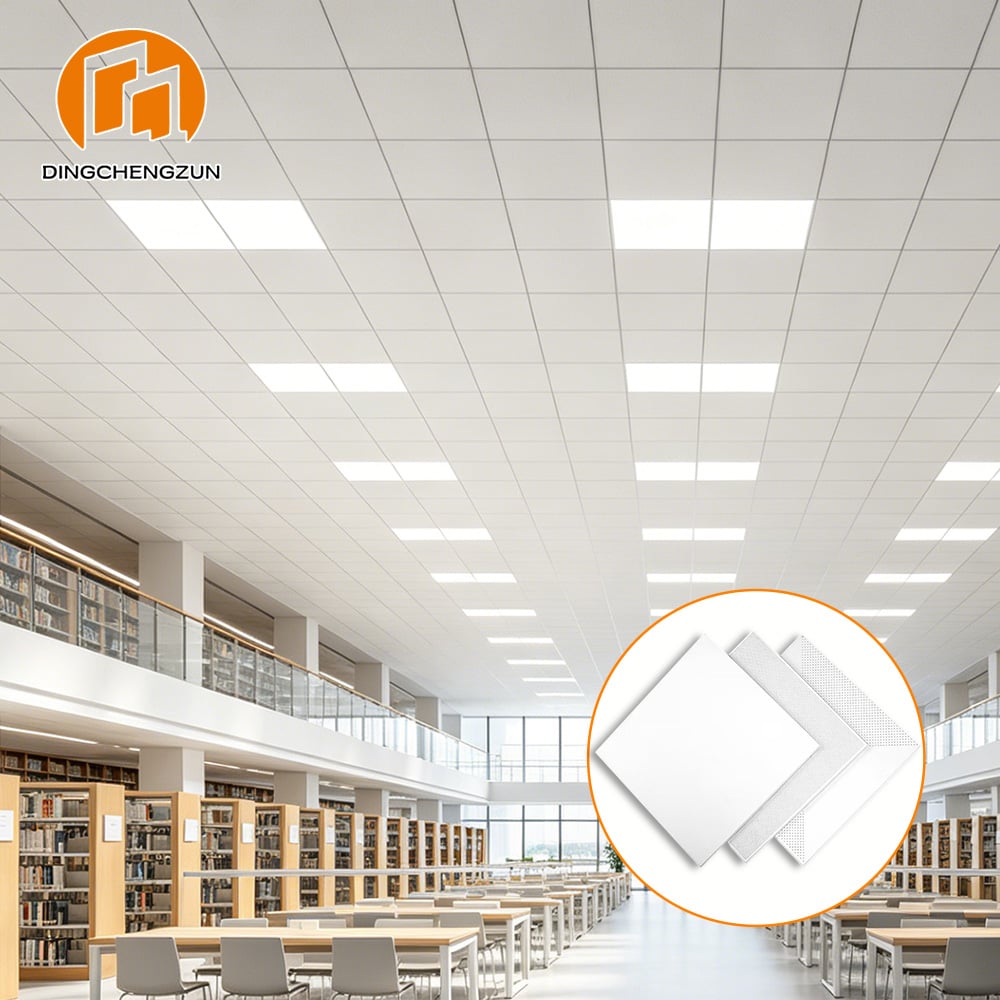
When it comes to designing safe and effective learning environments, choosing the right ceiling system is a critical decision. Aluminum ceiling solutions for school buildings have become the preferred choice for architects and facility managers because they uniquely address two non-negotiable performance areas: fire safety and acoustic requirements. This comprehensive guide explores how aluminum ceiling panels for schools meet stringent fire codes, deliver superior sound absorption, and provide long-term value in educational facilities ranging from K-12 classrooms to university lecture halls.
FIRE SAFETY REQUIREMENTS FOR SCHOOL CEILINGS: WHY ALUMINUM IS THE SAFEST CHOICE
Fire safety is the foremost concern in any educational building. School ceilings must comply with the most rigorous fire ratings to protect hundreds of occupants and allow safe evacuation. The International Building Code (IBC) and local regulations mandate that ceiling materials in schools achieve a Class A fire rating under ASTM E84 testing. This standard measures flame spread and smoke development, requiring a Flame Spread Index of 25 or less and a Smoke Developed Index of 450 or less.
Aluminum ceiling systems for educational facilities excel in these tests. A fire rated aluminum ceiling panel typically produces a flame spread below 15 and smoke development below 350, far exceeding the minimum Class A requirements. Unlike mineral fiber or wood-based products, aluminum is non-combustible and does not contribute fuel to a fire. When exposed to high temperatures, aluminum ceiling panels for schools do not release toxic fumes or molten drips, making them one of the safest ceiling materials for high-occupancy spaces.
In addition, aluminum ceiling fire resistance is permanent. Fire ratings do not degrade with age, humidity, or cleaning cycles. This is particularly important in school buildings where maintenance schedules are often stretched. Specifying fire safe ceiling panels for schools that are tested to ASTM E84 and ASTM E136 (non-combustibility) ensures that the ceiling will perform as expected throughout the life of the building.
For projects in China, compliance with GB 50222 requires ceiling materials to meet Class A non-combustible standards. High-quality aluminum ceiling solutions made from 3003 or 5052 alloy with halogen-free flame-retardant coatings fully satisfy these requirements, providing a fire resistance rating of no less than 0.5 hours. This makes aluminum ceiling panels for classrooms and corridors a code-compliant, risk-free option.
ACOUSTIC REQUIREMENTS FOR SCHOOL BUILDINGS: ACHIEVING OPTIMAL SPEECH INTELLIGIBILITY
Beyond fire safety, acoustic performance is the second pillar of effective school ceiling design. Studies consistently show that poor classroom acoustics hinder learning, increase teacher fatigue, and reduce student engagement. The ANSI/ASA S12.60 standard sets clear acoustic criteria for educational spaces, including maximum reverberation time (RT60) of 0.6 to 0.7 seconds and background noise levels below 35 dBA.
To meet these acoustic requirements for school ceilings, designers rely on the Noise Reduction Coefficient (NRC). For standard classrooms, a target NRC of 0.70 to 0.85 is recommended, while music rooms and auditoriums may require NRC values of 0.90 or higher. Perforated aluminum acoustic panels for schools are engineered to achieve these targets through precise hole patterns and high-density acoustic backing.
Classroom acoustic ceiling panels made from perforated aluminum with fleece or mineral wool backing deliver NRC ratings between 0.70 and 0.90. For example, a 600x600 mm perforated aluminum ceiling panel with 20 to 25 percent open area and 25 mm acoustic insulation can achieve an absorption coefficient above 0.5, effectively controlling reverberation. In music and performance spaces, high-open-area aluminum panels (30 to 40 percent) with 30 mm backing can reach NRC values of 0.85 or more, ensuring clarity for both speech and instrumental music.
One of the major advantages of aluminum acoustic ceiling tiles for schools is their tunability. By adjusting perforation diameter, hole spacing, and cavity depth, manufacturers can customize the acoustic response to suit specific room volumes and usage patterns. This flexibility allows architects to specify the ideal acoustic ceiling for classrooms, laboratories, gymnasiums, and auditoriums within a single building, all while maintaining a consistent aesthetic.
BALANCING FIRE SAFETY AND ACOUSTICS WITH ALUMINUM CEILING SYSTEMS
The true value of aluminum ceiling solutions for school buildings lies in their ability to simultaneously satisfy fire safety and acoustic requirements without compromise. Many traditional ceiling materials, such as mineral fiber, provide good acoustics but are vulnerable to moisture, impact damage, and fire degradation. Wood-based products may offer warmth but fall short on fire ratings.
Aluminum ceiling panels for schools, however, deliver Class A fire resistance and high NRC performance in one integrated system. This dual capability simplifies specification, reduces the number of materials needed, and ensures that the ceiling contributes to both life safety and learning outcomes. Moreover, aluminum ceiling systems for educational buildings are available in a range of perforation patterns, colors, and finishes, allowing designers to create visually appealing spaces without sacrificing code compliance.
For corridors and high-traffic zones, where impact resistance is as important as acoustics, aluminum ceiling panels with 0.8 mm thickness and 3H-hardness coating withstand daily abuse from carts, balls, and maintenance access. These durable acoustic ceiling panels for schools maintain their appearance and performance for decades, reducing replacement costs and minimizing disruption to school operations.
MOISTURE RESISTANCE, INDOOR AIR QUALITY, AND SUSTAINABILITY
In addition to fire safety and acoustics, aluminum ceiling solutions for schools offer significant benefits in moisture resistance and indoor air quality. School buildings are prone to humidity, spills, and occasional roof leaks. Mineral fiber ceilings absorb moisture, leading to sagging, staining, and mold growth. Coated aluminum panels are impervious to moisture and can be washed with disinfectants, making them ideal for maintaining a healthy environment.
Furthermore, high-quality aluminum ceiling panels for classrooms contain zero added formaldehyde and low VOCs, contributing to better indoor air quality. Many products carry Indoor Advantage Gold certification and support LEED v4 credits. For schools seeking green building certification, aluminum ceiling systems with Health Product Declarations (HPD) and environmental product declarations provide transparent material data.
The sustainability of aluminum ceiling panels for schools extends to their recyclability. At end of life, aluminum can be recycled indefinitely without loss of properties, reducing landfill waste and supporting circular economy goals. When combined with long service life and low maintenance, aluminum ceiling solutions offer a lower total cost of ownership compared to less durable alternatives.
CHOOSING THE RIGHT ALUMINUM CEILING FOR YOUR SCHOOL PROJECT
Selecting the appropriate aluminum ceiling system for a school building requires careful consideration of several factors. First, assess the specific fire safety and acoustic requirements for each space. Classrooms need NRC 0.70 or higher and Class A fire rating. Auditoriums require higher NRC and enhanced fire resistance. Corridors prioritize impact resistance and cleanability.
Second, choose the right perforation pattern and acoustic backing. For general classrooms, a 3 to 5 mm perforation with 15 to 25 percent open area and 20 to 25 mm acoustic fleece is effective. For music rooms, opt for 30 to 40 percent open area and thicker insulation. Always verify that the selected product has been independently tested to ASTM E84, ASTM E136, and ANSI S12.60 standards.
Third, consider the finish and coating. Baked enamel or powder-coated finishes offer durability and color options to match school branding. Woodgrain films provide a warm aesthetic while maintaining fire performance. Ensure that coatings are halogen-free and low-VOC to preserve indoor air quality.
Finally, work with a manufacturer that provides comprehensive documentation, including test reports, fire certificates, acoustic data, and sustainability declarations. This documentation is essential for building code approval, LEED submission, and long-term facility management.
WHY ALUMINUM CEILING SOLUTIONS ARE THE SMART CHOICE FOR SCHOOLS
In summary, aluminum ceiling solutions for school buildings deliver an unmatched combination of fire safety, acoustic performance, durability, moisture resistance, and sustainability. They meet the strictest fire codes with ASTM E84 Class A ratings, achieve classroom acoustic standards with NRC values up to 0.90, and withstand the rigorous demands of educational environments for decades.
By specifying aluminum ceiling panels for schools, architects and facility planners ensure that ceilings are not just passive finishes, but active components of a safe, comfortable, and productive learning space. From fire rated aluminum ceiling panels to high-performance acoustic ceiling tiles, the versatility of aluminum makes it the ideal material for every area of a school, from kindergarten classrooms to university auditoriums.
When planning your next school project, prioritize ceiling systems that deliver proven fire safety and acoustic requirements. Choose perforated aluminum acoustic panels with certified Class A fire resistance, backed by independent testing and long-term warranties. Your students, teachers, and staff deserve nothing less than the best protection and acoustics that modern aluminum ceiling technology can provide.