 EN
EN


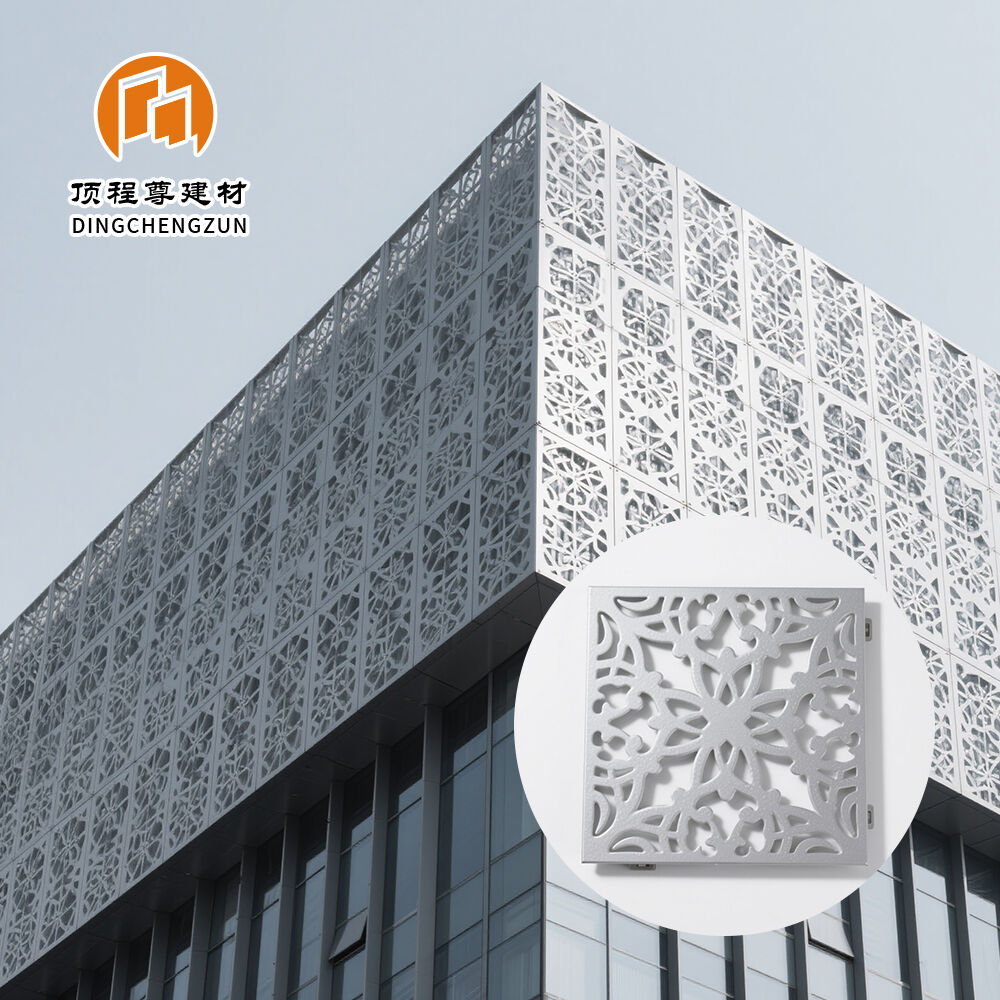
Modern architecture continues to push boundaries with innovative materials and design techniques, and aluminum veneer has emerged as a revolutionary solution for creating stunning curved facades. This lightweight yet durable material offers architects unprecedented flexibility in achieving complex geometries while maintaining structural integrity and aesthetic appeal. The versatility of aluminum veneer makes it an ideal choice for contemporary building projects that demand both visual impact and long-term performance.
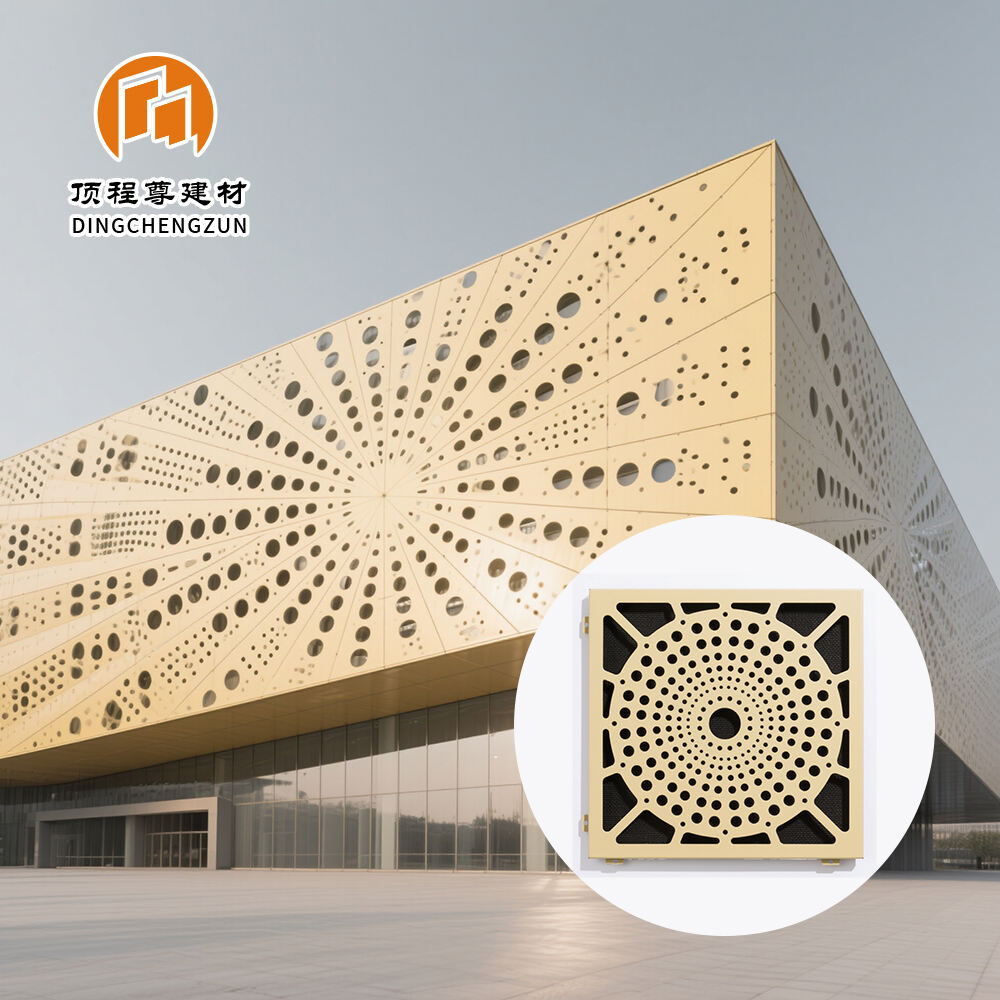
Understanding the Properties of Aluminum Veneer for Curved Applications
Material Composition and Flexibility
Aluminum veneer consists of thin aluminum sheets bonded to various backing materials, creating a composite that combines strength with remarkable formability. The material's inherent flexibility allows it to conform to curved surfaces without compromising structural integrity. This unique characteristic makes aluminum veneer particularly suitable for architectural applications requiring smooth, continuous curves. The manufacturing process involves careful selection of aluminum alloys that maintain their properties during forming operations while providing the necessary durability for exterior applications.
The thickness of aluminum veneer typically ranges from 3mm to 6mm, with the optimal thickness depending on the specific curvature requirements and structural demands. Thinner sheets offer greater flexibility for tight radius curves, while thicker options provide enhanced rigidity for larger spans. The backing material, often composed of polyethylene or mineral-filled cores, contributes to the overall performance characteristics while maintaining workability during installation.
Thermal and Weather Resistance
One of the most significant advantages of aluminum veneer in curved applications is its exceptional resistance to thermal expansion and contraction. This property is crucial for maintaining the integrity of curved facades, as temperature variations can cause significant stress in building materials. The coefficient of thermal expansion for aluminum veneer is relatively low, ensuring that curved installations maintain their shape and appearance throughout various weather conditions.
The surface treatment options for aluminum veneer further enhance its weather resistance, with PVDF coatings providing superior protection against UV radiation, acid rain, and environmental pollutants. These protective coatings maintain their color stability and gloss retention for decades, making aluminum veneer a cost-effective long-term solution for curved architectural elements exposed to harsh environmental conditions.
Design Principles for Curved Aluminum Veneer Systems
Geometric Considerations
Creating successful curved designs with aluminum veneer requires careful consideration of geometric principles and manufacturing constraints. The minimum bend radius varies depending on the specific product and forming method, typically ranging from 500mm to 2000mm for standard applications. Understanding these limitations during the design phase ensures that architectural visions can be realized without compromising material performance or increasing project costs unnecessarily.
Complex curves can be achieved through strategic panel segmentation, where larger curved surfaces are divided into smaller, manageable sections. This approach allows for precise control over the final geometry while maintaining smooth visual transitions between adjacent panels. The segmentation strategy must balance aesthetic requirements with practical installation considerations, ensuring that joint locations are both functional and visually appealing.
Structural Support Systems
The structural framework supporting curved aluminum veneer installations requires specialized design attention to accommodate the unique load distribution patterns created by curved surfaces. Traditional flat panel support systems are inadequate for curved applications, necessitating custom-engineered solutions that provide adequate support while allowing for thermal movement and installation tolerances.
Secondary structural elements must be designed to follow the intended curve precisely, often requiring three-dimensional modeling and CNC fabrication to achieve the necessary accuracy. The connection details between the aluminum veneer panels and the supporting structure must accommodate both in-plane and out-of-plane forces while maintaining the smooth curved profile. Proper attention to these structural considerations ensures long-term performance and prevents unsightly deformations or panel failures.
Manufacturing and Fabrication Techniques
Roll Forming Methods
Roll forming represents one of the most effective methods for creating curved aluminum veneer panels with consistent curvature along their length. This process involves passing flat aluminum veneer sheets through a series of specially configured rollers that gradually impart the desired curve. The controlled nature of roll forming ensures uniform curvature and minimizes material stress, resulting in high-quality finished panels suitable for architectural applications.
The roll forming process can accommodate various curve profiles, from simple cylindrical shapes to more complex compound curves. The tooling requirements for each specific curve profile represent a significant investment, making this method most cost-effective for projects requiring multiple panels with identical curvature. Modern roll forming equipment incorporates computer-controlled systems that ensure consistent results and allow for rapid changeover between different curve profiles.
Press Brake Forming
For projects requiring smaller quantities of curved aluminum veneer panels or more complex geometries, press brake forming offers greater flexibility in manufacturing. This process utilizes specialized tooling and computer-controlled press brakes to create precise curves in aluminum veneer sheets. The ability to program complex forming sequences allows manufacturers to produce panels with multiple curves or compound geometries that would be difficult to achieve through other methods.
Press brake forming requires careful consideration of material properties and forming sequences to prevent surface damage or structural failure during the manufacturing process. Proper tooling design and forming speeds are critical factors in achieving high-quality results. The flexibility of this manufacturing method makes it particularly suitable for custom architectural projects where each panel may have unique geometric requirements.
Installation Strategies and Best Practices
Planning and Preparation
Successful installation of curved aluminum veneer systems begins with comprehensive planning and site preparation. Detailed installation drawings must account for the three-dimensional nature of curved surfaces, providing installers with precise positioning information and connection details. The complexity of curved installations typically requires specialized installation crews with experience in handling and positioning large curved panels safely and accurately.
Site preparation for curved aluminum veneer installations often involves more extensive surveying and layout work compared to flat panel systems. The supporting structure must be constructed to extremely tight tolerances to ensure proper panel fit and alignment. Any deviations from the intended geometry can result in significant installation challenges and compromise the final appearance of the facade system.
Handling and Positioning Techniques
The installation of curved aluminum veneer panels requires specialized handling equipment and techniques to prevent damage during transport and positioning. Standard flat panel handling methods are inadequate for curved panels, which may be subject to different stress patterns and require custom support during lifting and positioning operations. Vacuum lifting systems and custom-designed support fixtures help ensure safe and accurate panel placement.
Weather conditions play a more critical role in curved panel installations due to the increased complexity of positioning and alignment operations. Installation schedules must account for wind conditions and temperature variations that could affect panel behavior during installation. Proper sequencing of panel installation helps maintain overall system alignment and prevents cumulative errors that could compromise the final appearance.
Performance Benefits and Advantages
Aesthetic and Visual Impact
Curved aluminum veneer facades create distinctive visual effects that set buildings apart from conventional flat-panel designs. The continuous curved surfaces interact with light throughout the day, creating dynamic shadow patterns and reflections that change with viewing angle and sun position. This visual dynamism contributes significantly to the architectural character of modern buildings and helps create memorable landmark structures.
The smooth, uninterrupted surfaces achievable with aluminum veneer eliminate the visual breaks associated with traditional building materials, creating a seamless appearance that emphasizes the overall building form. Color and finish options further enhance the visual impact, with metallic finishes providing striking reflective properties and solid colors offering bold architectural statements. The ability to incorporate graphics or patterns into aluminum veneer surfaces opens additional design possibilities for creative architectural expression.
Functional Performance Benefits
Beyond aesthetic considerations, curved aluminum veneer systems offer significant functional advantages in building performance. The aerodynamic properties of curved surfaces can reduce wind loads on building facades, potentially leading to structural cost savings and improved building stability. The smooth surface finish of aluminum veneer minimizes dirt accumulation and facilitates natural cleaning through rainfall, reducing long-term maintenance requirements.
Thermal performance benefits are achieved through the excellent heat dissipation properties of aluminum and the ability to incorporate insulation systems behind curved panels. The continuous nature of curved surfaces can also contribute to improved acoustic performance by reducing sound reflection patterns compared to flat surfaces with multiple joints and discontinuities.
Challenges and Solutions in Curved Design Implementation
Technical Challenges
The implementation of curved aluminum veneer designs presents several technical challenges that must be addressed through careful planning and engineering. Thermal movement accommodation becomes more complex in curved systems due to the three-dimensional nature of the expansion and contraction forces. Joint design must account for movement in multiple directions while maintaining weather sealing and structural integrity.
Manufacturing tolerances become more critical in curved applications, as small deviations can compound to create significant alignment issues during installation. Quality control procedures must be enhanced to ensure that each panel meets the required geometric specifications. Advanced measuring techniques, including laser scanning and coordinate measuring machines, are often necessary to verify panel geometry before shipping to the construction site.
Cost Management Strategies
The specialized nature of curved aluminum veneer systems typically results in higher costs compared to standard flat panel installations. However, various strategies can help manage these costs while maintaining design quality. Standardizing curve radii across the project reduces tooling costs and manufacturing complexity. Careful coordination between design and manufacturing teams can identify opportunities to optimize panel sizes and minimize waste.
Value engineering exercises should focus on achieving the desired architectural effect while simplifying manufacturing and installation requirements where possible. This might involve adjusting curve radii to match standard tooling capabilities or modifying panel division patterns to reduce the number of unique panel shapes required. Early contractor involvement in the design process can provide valuable input on cost-effective implementation strategies.
Future Trends and Innovations
Advanced Manufacturing Technologies
Emerging manufacturing technologies continue to expand the possibilities for curved aluminum veneer applications. Computer-controlled forming equipment with enhanced precision capabilities allows for more complex geometries and tighter tolerances. Advanced simulation software enables manufacturers to predict forming behavior and optimize process parameters before physical production begins, reducing development time and material waste.
Digital fabrication techniques, including CNC machining and waterjet cutting, provide new possibilities for creating custom connection details and specialized panel shapes. These technologies enable the production of unique architectural elements that would be impossible or prohibitively expensive using traditional manufacturing methods. Integration of digital design tools throughout the supply chain improves coordination and reduces errors in complex curved projects.
Sustainable Design Integration
Sustainability considerations are increasingly important in architectural material selection, and aluminum veneer offers several environmental advantages for curved applications. The recyclability of aluminum materials supports circular economy principles, while the longevity of properly installed aluminum veneer systems reduces lifecycle environmental impact. Energy-efficient manufacturing processes and reduced transportation requirements for lightweight panels further contribute to environmental benefits.
Integration of solar collection systems and smart building technologies into curved aluminum veneer facades represents an emerging trend that combines aesthetic appeal with functional performance. The large surface areas provided by curved facades offer opportunities for incorporating photovoltaic elements or other energy harvesting technologies while maintaining architectural design integrity.
FAQ
What is the minimum radius that can be achieved with aluminum veneer panels
The minimum bend radius for aluminum veneer typically ranges from 500mm to 2000mm, depending on the panel thickness, backing material, and specific product specifications. Thinner panels generally allow for tighter radii, while thicker panels provide greater structural strength but require larger curve radii. Manufacturers can provide specific minimum radius information based on the exact aluminum veneer product and intended application. Custom forming techniques may allow for tighter radii in specialized applications, but this often requires additional engineering analysis and testing.
How do curved aluminum veneer installations handle thermal expansion
Curved aluminum veneer systems accommodate thermal expansion through specialized joint design and flexible connection details that allow movement in multiple directions. The expansion joints must account for both linear expansion along the panel length and the complex three-dimensional movement patterns created by curved geometry. Proper joint design includes weather sealing systems that maintain their integrity throughout the full range of thermal movement. Engineering analysis is typically required to determine appropriate expansion joint locations and sizing for each specific project geometry and climate conditions.
What are the typical costs associated with curved aluminum veneer compared to flat panels
Curved aluminum veneer systems typically cost 20-50% more than equivalent flat panel systems, with the exact premium depending on project complexity, curve radii, and production quantities. Additional costs include specialized tooling, increased manufacturing time, custom structural support systems, and more complex installation requirements. However, the cost premium can be minimized through careful design optimization, standardization of curve radii, and early contractor involvement in the planning process. The long-term value provided by distinctive architectural character and reduced maintenance requirements often justifies the initial cost premium for many projects.
Can aluminum veneer be formed into compound curves or complex three-dimensional shapes
Yes, aluminum veneer can be formed into compound curves and complex three-dimensional shapes, though this requires specialized manufacturing techniques and equipment. Single-curvature applications are most common and cost-effective, while double-curvature or compound curve applications require more sophisticated forming methods such as stretch forming or stamping. Very complex shapes may require segmentation into multiple panels that are carefully designed to create smooth visual transitions. The feasibility and cost-effectiveness of complex curved shapes depend on the specific geometry requirements, production quantities, and available manufacturing capabilities.
Table of Contents
- Understanding the Properties of Aluminum Veneer for Curved Applications
- Design Principles for Curved Aluminum Veneer Systems
- Manufacturing and Fabrication Techniques
- Installation Strategies and Best Practices
- Performance Benefits and Advantages
- Challenges and Solutions in Curved Design Implementation
- Future Trends and Innovations
-
FAQ
- What is the minimum radius that can be achieved with aluminum veneer panels
- How do curved aluminum veneer installations handle thermal expansion
- What are the typical costs associated with curved aluminum veneer compared to flat panels
- Can aluminum veneer be formed into compound curves or complex three-dimensional shapes