 EN


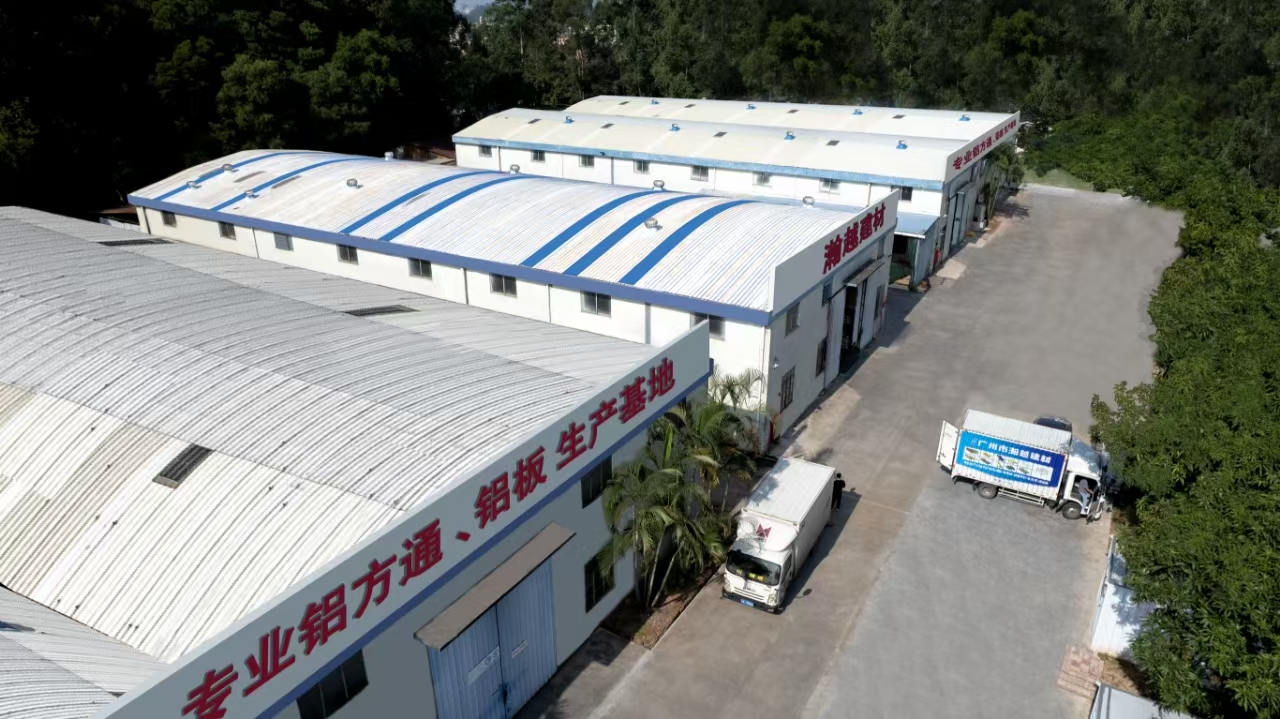
Search for "aluminum ceiling manufacturer" and almost every supplier says it is a factory. Many are trading companies that buy from factories and resell. That is not necessarily bad, but it changes your price, lead time, technical support and how quickly problems get fixed.
This guide compares the two honestly, explains when each makes sense, and gives you practical checks to confirm who you are really buying from before you place a deposit.
Factory vs trading company at a glance
Direct factory |
Trading company |
|
|---|---|---|
Price |
No middleman margin |
Adds a margin, often 10–30% |
Lead time |
Set by its own production schedule |
Depends on a factory it does not control |
Technical support |
Engineers who make the product |
Sales staff relaying questions |
Customization |
Can adjust tooling, profiles and finishes |
Limited to what its factories offer |
Quality control |
Controls every step in-house |
Inspects finished goods, if at all |
Problem solving |
Fixes the cause on its own line |
Must negotiate with the factory |
Product range |
Deep in its own category |
Broad across many categories |
Small mixed orders |
Less flexible |
Often more flexible |
The last two rows are where traders genuinely add value. The others are why most project buyers prefer to work directly with a manufacturer.
When a trading company is the better choice
A good trading company can be the right partner when:
- You need many unrelated products in one container, such as ceilings plus lighting, tiles and sanitary ware, and want one supplier to consolidate them.
- Your order is small and mixed, below the quantities a factory schedules efficiently.
- You have no time to manage suppliers and value a single English-speaking contact more than the lowest price.
For a dedicated ceiling or facade package on a commercial project, a factory is usually the better fit. Those projects depend on custom sizes, drawing approval, batch consistency and fast technical answers, which a reseller cannot provide directly.
7 ways to verify a supplier is a real factory
1. Check the business license scope
Ask for the business license and look at the registered business scope. A manufacturer lists production or processing (生产 / 加工) of aluminum building materials. A trader lists only sales or import and export.
2. Do a live video call on the production floor
Ask for an unscheduled video call walking through the plant: coil storage, forming lines, coating line and packing area. A trader can send factory photos, but rarely a live, unplanned walk-through.
3. Ask technical questions only a manufacturer can answer
For example: Which alloy do you use for 0.6 mm clip-in tiles, and why? What coating thickness do you apply? What is your flatness tolerance per square meter? A factory answers in numbers. A reseller says it will check and get back to you.
4. Match the address to the factory
Look up the company address on a map and in satellite view. A factory address shows industrial buildings with loading yards, not an office tower.
5. Check certificates and test reports
Fire-rating reports, ISO certificates and coating test reports should carry the supplier's own company name and factory address. Reports under another company's name are a strong sign of reselling.
6. Ask to watch your own order
Request photos or video of your samples and production run, ideally with your project name on a card in the frame. Factories can do this easily, while traders depend on someone else's cooperation.
7. Visit or send an inspector
For larger projects, visit the plant or hire a third-party inspection company to audit it. A genuine factory welcomes both.
Questions to ask any supplier
- How many production lines do you run for ceilings, and what is your daily capacity?
- Which processes are done in-house: forming, perforation, coating, packing?
- What alloy, thickness tolerance and coating thickness will you guarantee in writing?
- Can you provide shop drawings and approve a sample before mass production?
- How do you keep color consistent across batches on a phased project?
- What happens if panels arrive damaged or out of specification?
- Can you share contacts or case studies from similar projects in my country?
Red flags
- The price is far below others for the same stated thickness.
- The supplier sells hundreds of unrelated products, from ceilings to furniture.
- Factory photos are generic, watermarked or appear on other suppliers' websites.
- Technical questions take days to answer, or answers are vague.
- The supplier avoids live video or refuses a factory visit.
- Bank account name differs from the company on the contract.
How Dingchengzun works as a direct factory
We are a manufacturer, and we invite buyers to test us with every check above.
- Our own plant in Nancun Town, Panyu District, Guangzhou, with seven production lines for aluminum ceilings and metal veneer panels.
- In-house processes: CNC punching and cutting, cold bending, forming, coating and packing. [TO CONFIRM: confirm which steps are fully in-house, e.g. powder coating and PVDF]
- Capacity: up to [TO CONFIRM: 50,000 or 10,000] m² per day, so large and phased projects stay on schedule.
- Quality control: 36 inspection steps, with flatness held to 0.05 mm per square meter on ceiling panels.
- Engineering support: CAD and 3D drawings, shop drawings and sample approval before mass production.
- Open to inspection: live video calls of the production floor, on-site factory visits, and third-party inspections.
- More than 10 years making aluminum ceilings and curtain wall systems, with projects such as Almaty International Airport and hospitals in Guangdong.
FAQ
Are factory prices always lower than a trading company's? Usually, because there is no reseller margin. But compare like for like: a trader quoting thinner panels or a cheaper coating can look cheaper while delivering less.
Can a factory handle small orders? Most can, at a higher unit price, because setup costs are spread over fewer square meters. Standard sizes and colors keep small orders affordable.
Some suppliers own a factory and also trade. Is that a problem? Not necessarily. Many manufacturers resell accessories they do not make, such as suspension systems or lighting. What matters is that the main ceiling panels come from their own line.