 EN
EN


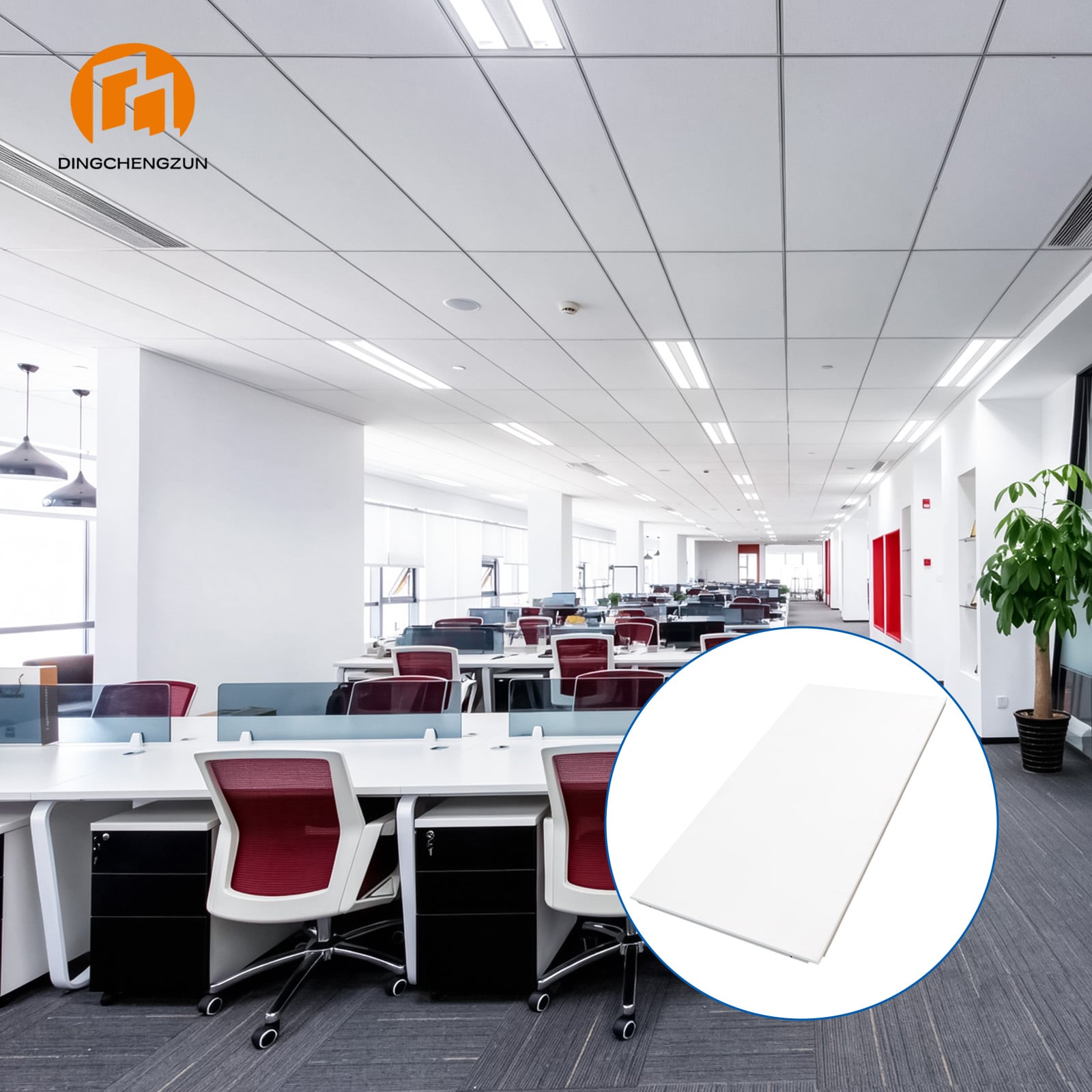
Choosing the right ceiling tile affects acoustics, fire safety, moisture resistance, and long-term cost. This guide breaks down the five main types so you can compare them at a glance — then dive into the details that matter for your space.
Quick Comparison: Which Ceiling Tile Is Right for You?
| Tile Type | Best For | Key Strength | Main Watch-Out |
|---|---|---|---|
| Mineral Fiber | Offices, classrooms | Sound absorption (NRC 0.50–0.90), low cost | Moisture-sensitive; needs treated version in damp areas |
| Fiberglass | Kitchens, semi-outdoor | 100% moisture-proof, lightweight | Brittle; plain appearance |
| Metal | Hospitals, airports, food areas | Durable, easy to clean, non-flammable | Not sound-absorbing on its own; needs acoustic backing |
| PVC | Basements, laundry rooms | Waterproof, very low cost | Releases odor when heated; avoid near stovetops |
| Wood Fiber / MDF | Retro or natural-look spaces | Warm visual texture | Weak fire rating, moisture-sensitive |
Mineral Fiber Tiles: The "Standard Answer" for Value and Acoustics
If you walk into an office or classroom and look up at a white, subtly textured square panel, chances are it's a Mineral Fiber ceiling tile. It is one of the most common and cost-effective choices on the market today, typically priced between $1 and $4 per square foot.
Its core raw materials are often a blend of recycled newspaper, perlite, mineral wool, and starch binders. This composition gives it a key capability: sound absorption. Mineral fiber tiles typically achieve a Noise Reduction Coefficient (NRC) of 0.50 to 0.90, effectively absorbing ambient noise and reducing echo in open-plan spaces.
However, mineral fiber has one clear weakness — it hates moisture. In high-humidity environments, it can sag, absorb water, and even harbor mold. So if you're planning to use it in a kitchen, bathroom, or poorly ventilated basement, pay special attention to whether the product carries a moisture-resistant coating (such as specially treated lines like ClimaPlus).
Fiberglass Tiles: The "Pragmatist" for Damp and Lightweight Applications
When the setting shifts to a humid restaurant kitchen or a semi-outdoor corridor, Fiberglass tiles become the more practical choice. Made from resin-bonded glass fibers, they are inherently non-absorbent, eliminating the risk of mold and corrosion at the source.
Beyond moisture resistance, their other major advantage is light weight. The weight savings not only reduce the load on the ceiling grid but also make overhead installation much easier. Their fire rating is usually decent as well. Be aware, though, that fiberglass tiles are relatively "brittle" in texture; when cutting during installation, take proper precautions to avoid airborne fibers irritating the skin. Their surface texture is also relatively plain, often less refined in appearance than mineral fiber tiles.
Metal Tiles: The "Industrial Logic" of Durability and Cleanability
If you're after extreme durability and cleanliness, Metal ceiling tiles are the top choice for public facilities (airports, train stations, hospitals) and high-end commercial spaces. Common materials include aluminum, galvanized steel, and copper.
The logic of metal tiles is completely different from fiber tiles. Metal itself is not sound-absorbing — it even reflects sound. Therefore, metal ceiling tiles used in projects typically need a mineral wool acoustic pad laminated to the back to improve acoustic performance. Their real strength lies in being "tough" — they won't warp from water, won't burn easily, and are extremely easy to clean. In food processing areas or operating rooms that require regular washing and disinfection, metal tiles are the only material that can withstand "rough" cleaning without damage.
Metal tiles are usually installed with a concealed grid or hook-on system, with tight joints between panels that can even create a visually completely flat, continuous surface. Of course, this level of durability and precision comes at a premium, typically placing it in the higher end of the ceiling tile price range.
PVC and Wood Fiber Tiles: The "Practical Options" for Specific Scenarios
In small spaces with limited budgets and a need for waterproofing (such as home basements or laundry rooms), PVC tiles offer a low-cost solution. They are completely waterproof, extremely lightweight, and easy to wipe clean. Note, however, that PVC may release odors when heated, making it unsuitable for installation near kitchen stovetops.
For spaces seeking a retro aesthetic or natural texture, Wood Fiber tiles or Medium-Density Fiberboard (MDF) provide a warm visual effect. MDF is lighter and less prone to warping than solid wood and can mimic the look of hardwood. However, its fire performance is typically weaker (mostly Class C), installation is more labor-intensive, and it risks swelling in humid environments.
Beyond Material: What Else Should You Look At?
1. The Two Faces of Acoustic Metrics
When choosing ceiling tiles, don't just look at "sound absorption." You need to distinguish between two metrics: NRC (Noise Reduction Coefficient) measures the ability to absorb sound (reducing in-room echo), while CAC (Ceiling Attenuation Class) measures the ability to block sound from traveling through (preventing conversations in the next room from reaching your ears). For open-plan offices, focus on NRC; for private meeting rooms and medical consultation rooms, pay close attention to CAC.
2. The Visual Game of Edge Design
Ceiling tile edges are not limited to just "flat." Square Edge looks clean and sharp, like a seamless wall; while Reveal or Tegular Edge makes the panel sit slightly below the grid, casting a subtle shadow line around each tile. This visual "grid" effect breaks up the monotony of a large ceiling and adds a stronger sense of design.
3. Don't Overlook the "Total Cost of Ownership"
The cheapest tile at purchase is often the most expensive in installation and long-term maintenance. For example, heavier gypsum composite boards or high-density fiber tiles require more closely spaced hangers and sturdier grid systems — installation labor costs can be 20% or more higher. Meanwhile, deeply textured tiles may look attractive but accumulate dust more easily and are harder to wipe clean. Over a service life of several years, their replacement frequency may be far higher than that of smooth-surfaced tiles.
Table of Contents
- Quick Comparison: Which Ceiling Tile Is Right for You?
- Mineral Fiber Tiles: The "Standard Answer" for Value and Acoustics
- Fiberglass Tiles: The "Pragmatist" for Damp and Lightweight Applications
- Metal Tiles: The "Industrial Logic" of Durability and Cleanability
- PVC and Wood Fiber Tiles: The "Practical Options" for Specific Scenarios
- Beyond Material: What Else Should You Look At?