 EN
EN


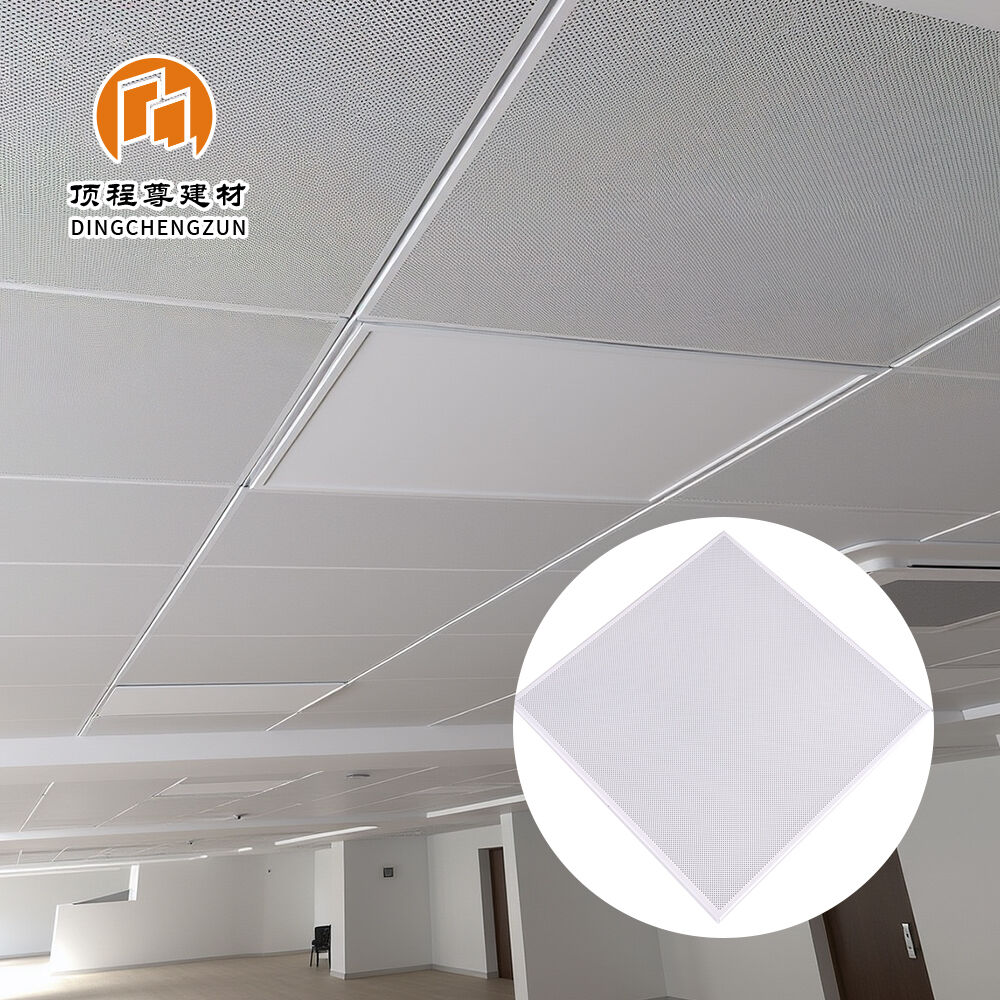
In commercial space design, suspended ceilings serve as a core component that balances safety compliance with spatial aesthetics. With the rise of open-plan offices and mixed-use commercial environments, corporate demands for ceilings have grown increasingly stringent—requiring compliance with global fire safety standards while enhancing spatial quality through design. Aluminum ceilings, leveraging material properties and manufacturing advancements, have emerged as the preferred solution for harmonizing fire resistance with design aesthetics.
I. Core Challenges in Commercial Space Ceilings: Balancing Fire Safety and Design
Commercial spaces feature high foot traffic and complex functions, where ceiling safety and visual appeal directly impact project implementation. Data reveals that approximately 32% of global commercial building fires are linked to substandard fire-resistant decorative materials, while poorly designed ceilings diminish employee efficiency and customer experience.
Professor Christoph Preining of Vienna University of Technology noted in “Does Office Design Affect User Efficiency?” that the physical environment of commercial spaces (fire safety, acoustic conditions, visual design) accounts for 41% of user satisfaction. Fire compliance serves as the foundational prerequisite, while aesthetic design directly correlates with perceived spatial value. Market research further indicates that aesthetically designed ceilings can increase commercial space brand premiums by 15%-20%.
II. Fire Resistance of Aluminum Ceilings: Academically Validated Safety Assurance
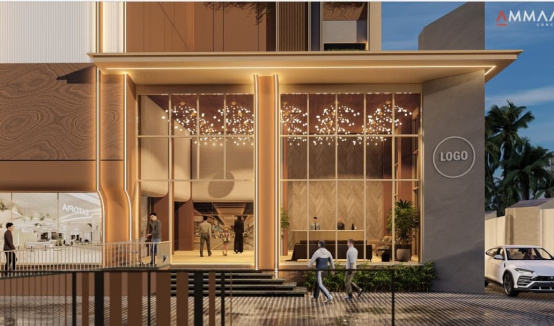
Premium aluminum ceilings utilize high-purity aluminum alloy as their base material, achieving Class A2 combustion performance (GB 8624-2025 standard). They meet the EN 13501-1 standard with over 1.5 hours of fire resistance, fully satisfying commercial building fire safety inspection requirements.
Comparative experiments by Professor Hans Müller's team at the German Building Materials Research Institute demonstrate that aluminum ceilings effectively block flame spread during fires. With a heat transfer rate only one-third that of steel, they delay structural heating, buying critical evacuation time and increasing initial escape success rates by 28%. Additionally, aluminum ceilings resist moisture and corrosion. After five years of use in environments with 85% humidity, their fire resistance performance degrades by only 3%, significantly outperforming traditional gypsum ceilings (47% degradation rate). This makes them ideal for commercial projects in coastal and humid regions, maintaining stable safety performance throughout their entire lifecycle.
Design Appeal of Aluminum Ceilings: Spatial Expression Balancing Aesthetics & Function
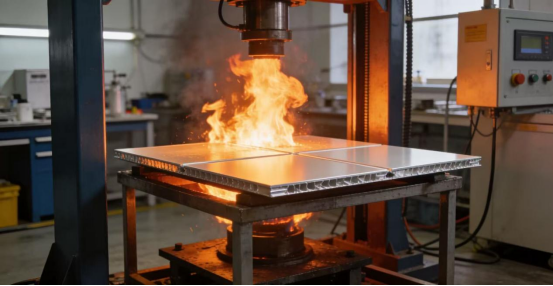
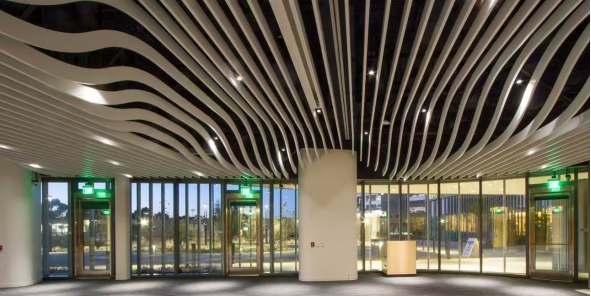
Aluminum ceilings offer diverse finishes like anodization and wood grain transfer, fitting styles from minimalism to light luxury, with 5-year fade resistance for lasting neatness. CNC bending and integrated forming enable custom linear/curved shapes and modular suspended ceilings.
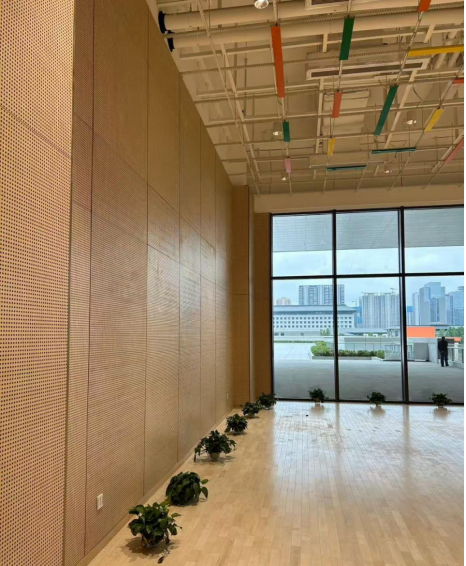
Prof. Alexander Redler (Vienna University of Technology) asserts uniquely shaped ceilings enhance visual layering in commercial spaces by 35%. Perforated aluminum ceilings with sound-absorbing cores achieve an NRC of 0.6–0.9. Greek ALPHA Acoustics Lab data reveals an average absorption coefficient of 0.8 at 125–4000Hz, reducing negotiation area noise below 45dB and enhancing communication efficiency by 22%, perfectly embodying functional aesthetics.
IV. Selection and Application Recommendations for Aluminum Ceilings in Commercial Spaces
1. Select by Scenario:
- Prioritize Class A2 fire-rated aluminum ceiling tiles for high-traffic public areas.
- Choose perforated acoustic aluminum ceilings with NRC ≥ 0.75 for conference rooms and meeting zones.
- Customize curved or suspended aluminum ceilings for premium exhibition halls.
2. Installation Compatibility: Utilize standard 600×600mm grid spacing for 40% faster installation than traditional ceilings. Supports individual panel removal for easy maintenance. For international projects, verify CE, ISO, or other target market compliance certifications.
3. Balance cost-effectiveness: While aluminum ceilings have slightly higher initial procurement costs, their lifespan exceeds 30 years—four times that of gypsum ceilings—resulting in over 50% savings on maintenance expenses over the long term.
V. Conclusion
The essence of commercial ceiling design lies in balancing safety and aesthetics. Aluminum ceilings perfectly meet the core demands of modern commercial spaces with their Class A2 fire resistance, diverse design expressions, and long-lasting durability.
Guangzhou Dingchengzun Building Materials specializes in exporting aluminum ceiling and curtain wall systems. Whether for multinational projects prioritizing safety compliance or high-end retail spaces emphasizing design sophistication, our customized aluminum ceiling solutions deliver dual satisfaction—fortifying commercial spaces with safety while elevating brand value.