 EN


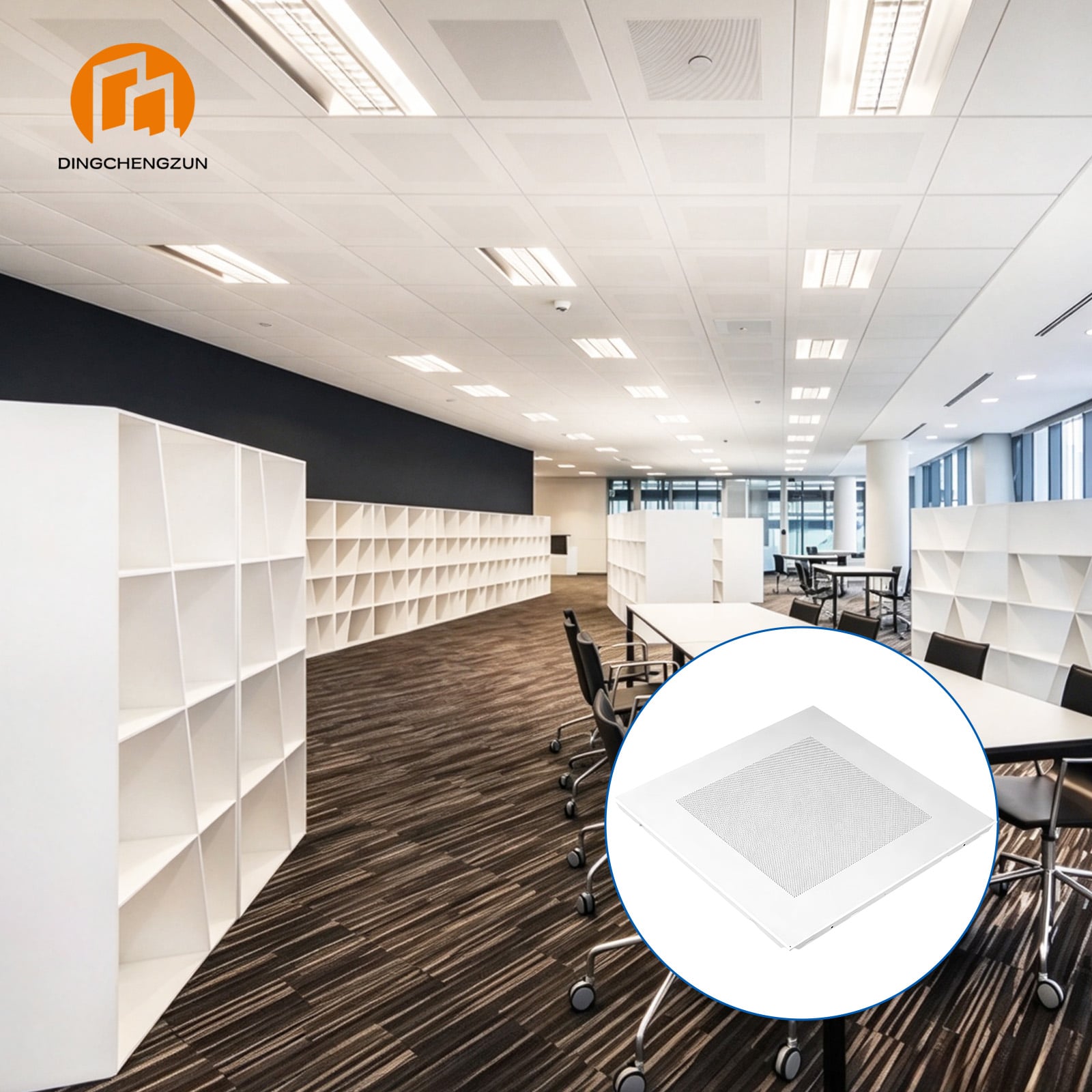
Most commercial aluminum ceilings cost between about US$6 and US$35 per m² FOB China, and solid aluminum facade panels run higher. The spread is wide because "aluminum ceiling" covers very different products: a 0.6 mm clip-in tile and a 3.0 mm PVDF-coated veneer panel share a material but little else.
As a direct aluminum ceiling manufacturer in Guangzhou, we price every project from the same handful of inputs. This guide explains each one, so you can compare quotes on equal terms and know where your budget actually goes.
Typical price ranges by ceiling system
The ranges below are indicative FOB Guangzhou prices for project orders (roughly 1,000 m² and up), standard white powder coating, panels only. Suspension systems, special finishes and freight are extra.
Ceiling system |
Common thickness |
Indicative price (US$/m²) |
Typical use |
|---|---|---|---|
Strip / linear ceiling |
0.5–0.8 mm |
6–12 |
Corridors, gas stations, metro stations |
Clip-in / lay-in tile (600×600) |
0.6–0.8 mm |
7–14 |
Offices, hospitals, schools |
Open cell / grid ceiling |
0.4–0.6 mm |
8–18 |
Malls, supermarkets, car parks |
Baffle / U-profile ceiling |
0.6–1.2 mm |
10–35 |
Airports, lobbies, exhibition halls |
Solid aluminum veneer (facade or feature ceiling) |
2.0–3.0 mm |
30–60 |
Curtain walls, canopies, atriums |
Baffle ceilings have the widest range because the price is driven by spacing: halving the gap between baffles roughly doubles the material per m² of ceiling.
The 8 factors that drive the cost
1. Alloy and thickness (the biggest factor)
Aluminum is sold by weight, so thickness sets the floor of your price. A 1 mm aluminum sheet weighs about 2.71 kg/m², and weight scales directly with thickness.
Panel thickness |
Weight (kg/m²) |
Raw aluminum value at ~US$3,100/t (US$/m²) |
|---|---|---|
0.6 mm |
1.63 |
5.1 |
0.8 mm |
2.17 |
6.7 |
1.0 mm |
2.71 |
8.4 |
3.0 mm |
8.13 |
25.2 |
The LME aluminum cash price was about US$3,100–3,135 per tonne in early October 2026 (source). Rolled coil costs more than ingot, so treat these figures as the minimum metal content of a panel, before any processing.
Alloy matters too. 1100 and 3003 alloys suit most interior ceilings. 5005 costs a little more and holds up better outdoors and in humid spaces.
A quote far below the metal value for its stated thickness usually means thinner material than specified. Ask for the thickness tolerance in writing and check it with a micrometer on samples.
2. Ceiling system and profile
Flat tiles are pressed and folded in a few fast steps. Baffles, open cells and curved panels need roll forming, extrusion or bending, plus more material per m² of ceiling. Taller cells, deeper baffles and tighter spacing all add metal.
3. Surface finish
- Powder coating: the standard choice for interiors and the lowest cost.
- Pre-coated (roller-coated) coil: very consistent color on large flat areas.
- Wood grain or stone grain transfer: an extra process, typically adding a few dollars per m².
- PVDF (fluorocarbon): two or three coats with strong UV resistance, needed for exteriors and semi-outdoor canopies.
- Anodized: a premium metallic look with higher process cost.
4. Perforation and acoustic backing
Perforating adds a punching step. Acoustic projects also need a non-woven acoustic fleece or mineral wool pad behind the panel. Ask whether your quote includes the backing, as some suppliers price it separately.
5. Size and customization
Standard modules (600×600, 300×1200, 300×300) use existing tooling and are the cheapest. Custom sizes, non-square shapes, curved panels and laser-cut patterns need drawings, programming and sometimes new tools. Large custom panels also have more offcut waste.
6. Order quantity
Every order carries fixed costs: line setup, color changes and coating batches. Spread over 300 m², they weigh heavily. Spread over 5,000 m², they almost vanish. Combining several areas of a project into one color and one module size keeps the unit price down.
7. Suspension system and accessories
Carriers, main and cross tees, hangers, wall angles and trims are often quoted separately. Depending on the system, they can add US$1.5–5 per m². Compare quotes on a complete-system basis, not panels alone.
8. Packaging and freight
Export cartons, edge protection and film protect the coating in transit. Freight depends on volume more than weight: flat tiles pack densely, while baffles and open cells take more container space per m². The trade term (EXW, FOB, CIF or DDP) decides who pays for each leg of the journey.
How to get an accurate quote
The fastest way to a firm price is to send the factory everything it will otherwise have to ask for. Include:
- Drawings: ceiling plans or reflected ceiling plans in CAD or PDF, with areas marked.
- Total area per ceiling type, in m².
- System and module size, for example clip-in 600×600 or baffle 50×100 at 150 mm centers.
- Thickness and alloy, or the performance you need so the factory can recommend one.
- Finish and color: RAL code, wood-grain reference or a physical sample.
- Perforation and acoustic requirements, such as a target NRC or hole pattern.
- Fire rating or standards required, for example A2 or a local code.
- Whether suspension and accessories are included.
- Destination port and preferred trade term (FOB, CIF or DDP).
- Required delivery date.
With this list, we can usually return a detailed quotation within 24 hours. That quotation breaks out panels, accessories, packaging and freight, so you can compare it line by line with other suppliers.
How to lower the cost without lowering quality
- Match thickness to the space. 0.6 mm is enough for most indoor tiles at standard heights. Save 0.8–1.0 mm for large panels, high-traffic access areas or humid zones.
- Use standard modules. Designing around 600×600 or 300×1200 avoids tooling and reduces offcut waste.
- Reserve PVDF for exteriors. Indoor ceilings rarely need it; quality powder coating performs well inside.
- Combine colors and sizes. Fewer variants mean fewer line changes and coating batches.
- Widen baffle spacing where the design allows. Going from 100 mm to 150 mm centers cuts baffle material by about a third.
- Approve samples early. A confirmed sample and shop drawing prevent remakes, which are the most expensive cost of all.
- Buy from the factory. A direct manufacturer removes the trading margin and lets you talk to the engineers who make the panels.
FAQ
Why do two quotes for "600×600 aluminum ceiling" differ so much? Usually because of thickness, alloy, coating brand or what is included. Compare the specifications line by line, especially actual thickness, coating thickness in microns and whether accessories are included.
Is the aluminum price likely to change my quote? Yes, for large or long-lead projects. Metal is a large share of the panel cost, so most factories hold a quote for a limited period, often 7–15 days. Confirming the order locks in the material price.
What is the minimum order quantity? Standard white panels can be made in small batches, but custom colors and sizes carry setup costs. Below a few hundred m², expect a higher unit price.
How long does production take? Lead time depends on the system, finish and quantity. Standard powder-coated tiles are fastest, while PVDF, wood-grain and custom shapes take longer. Your quotation should state the lead time after sample approval.
Does a cheaper aluminum ceiling cost more over time? Often it does. Panels that are too thin dent during maintenance access, and low-grade coatings fade or chalk. Replacing panels mid-life costs far more than the original saving.