 EN
EN


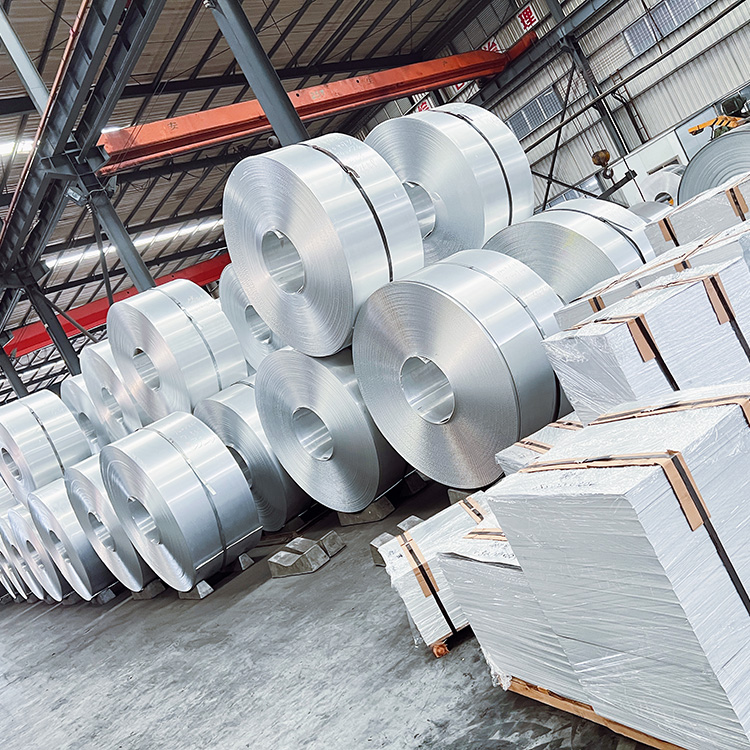
Every architect knows aluminum is recyclable. That's no longer the interesting question. The question procurement teams are actually asking in 2026 tender packages is more specific: which certification framework does this project need to satisfy, and what documentation can the supplier actually provide to support it?
For hospitals, airports, transit stations, and commercial towers, "sustainable material" has shifted from a marketing adjective to a checklist item that has to be backed by a specific document — an EPD, a recycled-content declaration, an ASI chain-of-custody statement. This guide is written for that audience: architects, contractors, and procurement teams who need to know what LEED, BREEAM, EPD, and ASI actually require, and how that maps onto the aluminum ceiling and aluminum veneer products most commonly specified in commercial and public buildings.
The Documentation Gap Most Projects Run Into
Aluminum's basic material story — infinitely recyclable, ~75% of all aluminum ever produced still in use, building-sector recovery rates above 95%, recycling energy roughly 5% of primary smelting — is well established and rarely disputed by anyone reviewing a submittal. Where projects actually stall is at the next step: turning that general material fact into project-specific credit documentation that a certification reviewer will accept.
That gap shows up in a few recurring ways:
- A design team assumes "recyclable" and "recycled content" are the same credit — they aren't, and most certification systems score them separately.
- A contractor requests recycled-content percentages from a supplier who can only speak to the alloy in general terms, not the specific batch or product line installed.
- An EPD is requested late in the project, after the material has already been ordered, instead of being confirmed at the specification stage.
Understanding what each framework actually asks for avoids all three of these delays.
What Each Framework Requires — In Practical Terms
LEED (Leadership in Energy and Environmental Design): Administered by the U.S. Green Building Council, LEED's Materials & Resources category is where aluminum ceilings and veneer panels typically earn credit. In current LEED versions, an Environmental Product Declaration is the preferred evidence, having largely replaced the older method of calculating recycled-content percentage by cost. Practically, this means a specifier should be requesting an EPD reference — not just a statement that "aluminum is recyclable" — when building out a LEED submittal.
BREEAM (Building Research Establishment Environmental Assessment Method): More common on projects across Europe, the Middle East, and parts of Asia, BREEAM evaluates materials against similar circular-economy and waste-management criteria as LEED, but with its own scoring structure. For international projects specifying Chinese-manufactured aluminum ceiling or curtain wall systems, BREEAM documentation requests are increasingly paired with supply-chain origin questions — where the raw aluminum was sourced and processed, not just where the panel was fabricated.
EPD (Environmental Product Declaration): An EPD is a third-party-verified report quantifying a product's environmental impact — energy use, greenhouse gas emissions, water use — across its production cycle, following international ISO methodology. It is not tied to one certification system; once obtained, the same EPD can typically support both LEED and BREEAM submissions, which makes it the single most reusable piece of documentation a project can request.
ASI (Aluminum Stewardship Initiative): ASI certifies responsible practice at the supply-chain level — from bauxite mining through smelting and casting — rather than certifying a finished ceiling panel itself. It's appearing more often in tender language for large international infrastructure projects where clients want assurance that sustainability claims hold up further upstream than the fabrication stage.
The practical takeaway for a specifier: LEED and BREEAM are project-level certifications your building pursues; EPD and ASI are supplier/product-level documents your building draws on as evidence. Confusing the two is the most common reason documentation requests get delayed mid-project.
Where This Applies Across Product Lines
Documentation requirements aren't identical across every product type — the questions a specifier asks about a curtain wall panel differ from what they ask about a hospital ceiling tile.
Aluminum veneer panels (curtain wall & facade cladding): Facade-level submittals are usually where EPD requests are most detailed, since exterior cladding is evaluated both for material impact and for its contribution to building envelope thermal performance. Specifiers working on curtain wall systems should confirm alloy grade and coating type early, since certain coating processes affect end-of-life recyclability and may need separate disclosure.
Grid ceilings & baffle ceilings (transit and airport projects): Public infrastructure procurement frequently bundles fire-performance certificates with sustainability documentation in the same submission package, since transit authorities are commonly subject to public-sector environmental mandates. Confirming which certificates a supplier already holds — versus which would need to be commissioned specifically for the project — should happen at the quotation stage, not after award.
Clip-in & lay-in ceiling tiles (hospitals and laboratories): Because healthcare ceilings are rarely replaced once installed, the embodied-impact documentation for the initial installation carries more weight in a facility's overall certification pursuit than it would for a shorter-cycle commercial interior. Hospital projects also frequently request antimicrobial surface treatment data alongside sustainability documentation, since the two are evaluated together in healthcare-specific rating systems.
Strip ceilings (offices and hospitality interiors): Interior fit-out projects pursuing certification on renovation work — rather than new construction — often have lighter documentation requirements than ground-up builds, but still typically require at minimum a recycled-content statement to support Materials & Resources credits.
What to Request From a Supplier Before Specifying
For any project tracking toward LEED, BREEAM, or a similar framework, these are the documents worth requesting at the quotation stage rather than after the order is placed:
- Alloy specification (e.g., 1100 or 3003 series) and post-consumer/post-industrial recycled content, if known
- Existing EPD, or confirmation of whether one can be produced for the order volume
- Coating/finish process details, since some finishes affect end-of-life recyclability
- For public infrastructure or supply-chain-sensitive projects, any available ASI or equivalent chain-of-custody documentation
A supplier that can answer these specifically — rather than defaulting to general statements about aluminum being "eco-friendly" — is one whose documentation will actually hold up during certification review.
A Note on Manufacturing-Level Practices
Alloy selection and production process also affect the material and waste profile behind a ceiling panel, even before certification documentation enters the picture. Aluminum ceiling and veneer panels commonly use 1100 or 3003-series alloys for their combination of high aluminum content, corrosion resistance, and suitability for repeated recycling. CNC-controlled cutting and cold-bending reduce trim scrap per panel compared with manual fabrication, and production lines with tighter tolerances generate fewer defective panels that would otherwise need to be reprocessed.
These are meaningful manufacturing-level practices — but they are not a substitute for a specific certification. A project that needs a documented LEED or BREEAM credit should confirm what formal paperwork a supplier can actually issue, rather than treating "our alloy is recyclable" as equivalent to holding an EPD or ASI certificate.
Frequently Asked Questions
Do I need an EPD for every LEED submission involving aluminum? Not strictly — recycled-content data can sometimes substitute — but an EPD is the documentation method most current LEED guidance favors, and it's reusable across multiple certification systems, making it worth requesting even when not mandatory.
Is ASI certification the same as an EPD? No. An EPD reports environmental impact data for a specific product. ASI certifies that the supply chain producing the raw aluminum follows responsible sourcing and production practices. A project may need one, both, or neither depending on its specific requirements.
Can the same documentation support both LEED and BREEAM? Often yes for EPD-based evidence, since both frameworks accept ISO-format environmental declarations, though each system has its own scoring structure for how that evidence translates into project points.
Why do hospital and transit projects ask for more documentation than office fit-outs? Public infrastructure and healthcare facilities are more frequently subject to regulatory sustainability mandates and have longer building lifespans, which raises the stakes on getting material documentation right at the specification stage rather than after installation.
Final Thoughts
The material case for aluminum ceilings and veneer panels was settled a long time ago. What separates a smooth certification process from a delayed one is whether a project team asks for the right documentation — EPD, recycled-content data, ASI chain-of-custody — early enough to matter, and whether the supplier can actually produce it rather than defaulting to general sustainability language.
If your project requires an EPD reference, alloy documentation, or technical data sheets to support a LEED, BREEAM, or ASI-related submission, our engineering team can confirm what's available for your specific order.