 EN
EN


Buying Aluminum Ceilings from China: MOQ, Lead Times, Customs & Quality Control
A practical guide for architects, contractors, and distributors sourcing aluminum ceiling systems from Chinese manufacturers.
Introduction
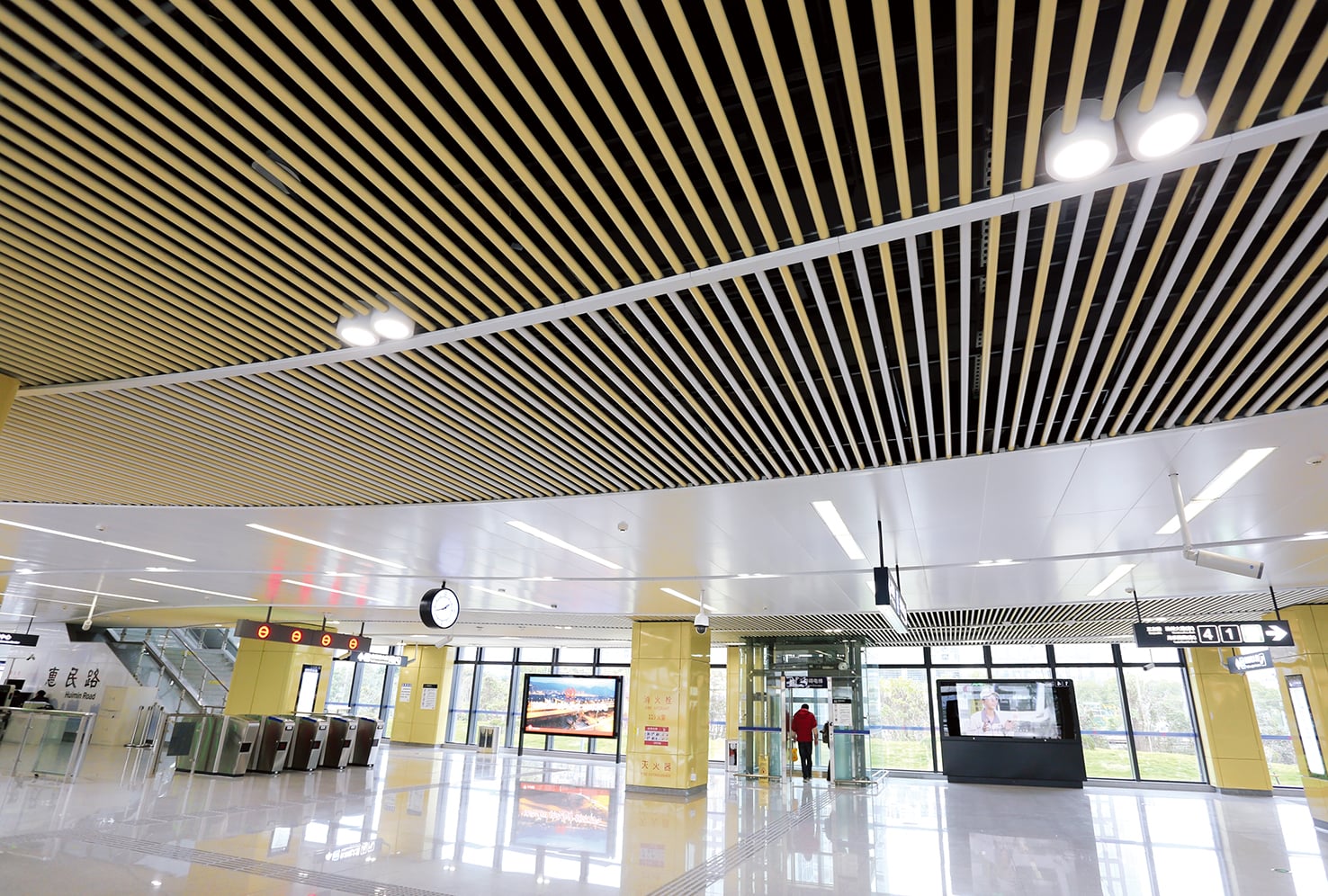
Over the past decade, aluminum ceiling systems — clip-in panels, baffle ceilings, grid ceilings, lay-in tiles, and linear strip ceilings — have become the default choice for hospitals, airports, transit stations, office towers, and convention centers around the world. A large share of that global supply now comes from China, where manufacturers combine automated production lines with competitive pricing and export experience built over years of serving overseas markets.
But sourcing directly from a Chinese factory raises questions that don't come up when buying from a local distributor: How many square meters do I need to order? How long will production actually take? What happens at customs when the container arrives? And how do I know the panels I receive will match the samples I approved?
This guide walks through the four questions we hear most often from international buyers, based on how the process typically works with established aluminum ceiling manufacturers.
Understanding MOQ (Minimum Order Quantity)
Minimum order quantities in the aluminum ceiling industry are usually expressed in square meters or in container volume rather than piece counts, since panels are cut and finished to project-specific dimensions.
What typically drives MOQ up or down:
- Product type — Standard clip-in or grid ceiling panels generally carry lower MOQs than baffle ceilings or perforated acoustic panels, which require additional tooling.
- Surface finish — Standard powder-coated (PE) finishes in stock colors are more flexible on quantity than PVDF/fluorocarbon coatings or custom RAL colors, which often require a minimum batch to justify a production run.
- Customization — Non-standard panel sizes, custom perforation patterns, or bespoke profiles raise the MOQ because they can't be combined with other customers' orders on the same production line.
Small projects vs. large projects: A single showroom, boutique office, or sample installation can often be accommodated with a smaller order — sometimes consolidated into a shared container (LCL) with other cargo. Large-scale projects such as hospitals, airports, or multi-building developments are typically ordered at full-container quantities (FCL), which also gives the buyer more leverage on unit pricing.
Tip: Buyers can often bring MOQ down by sticking to standard panel sizes and stock colors for a first order, then introducing custom specifications once a working relationship with the supplier is established.
Lead Times: From Order to Shipment
A typical aluminum ceiling order moves through several stages before it reaches the port:
- Sampling — Confirming panel profile, color, and perforation pattern with a physical sample.
- Cutting and forming — CNC cutting, roll-forming, or stamping the aluminum sheet to the approved dimensions.
- Surface treatment — Powder coating, PVDF spraying, or anodizing, followed by curing.
- Assembly and inspection — Fitting accessories (clips, keels, hangers) and running quality checks.
- Packing and loading — Palletizing and loading into containers for sea freight.
Standard vs. custom orders: Stock configurations in common sizes and colors move through this process faster than custom perforations or non-standard profiles, which require additional tooling and setup time before production can begin.
What affects lead time most:
- How quickly the deposit payment is confirmed (production typically doesn't start until payment is received)
- Factory capacity during peak seasons
- Fluctuations in raw aluminum ingot supply
How to compress the timeline: Approving samples early, locking in a production slot before finalizing all design details, and confirming payment terms in advance are the most effective ways buyers can shorten the overall order-to-shipment window.
Navigating Customs & Import Logistics
Once the ceiling panels are ready, the shipping and customs process becomes the next hurdle — and the one most likely to catch first-time importers off guard.
Documents to have in order:
- Commercial Invoice
- Packing List
- Bill of Lading (or Airway Bill for air freight)
- Certificate of Origin
- Material/test certificates, where required by the destination country
Regional considerations: Import requirements vary significantly by market. Buyers in GCC countries may need to account for specific building-material conformity requirements at the point of entry; several Southeast Asian and African markets apply their own tariff schedules and, in some cases, additional import permits for construction materials. It's worth confirming these requirements with a local customs broker before the shipment departs China, rather than after it arrives.
HS codes and tariffs: Aluminum ceiling products generally fall under HS codes for aluminum structures and their parts. Because tariff treatment can differ by finish and alloy, it's worth confirming the applicable code with your customs broker rather than assuming it matches a previous shipment.
FCL vs. LCL: Full-container-load (FCL) shipments are standard for large orders and offer the most protection for panels in transit. Less-than-container-load (LCL) shipments work for smaller orders but involve consolidation with other cargo, which can add handling time.
Common causes of customs delay: Incomplete documentation, missing certificates of origin, or discrepancies between the packing list and the actual shipment are the most frequent causes of hold-ups — nearly all of which are avoidable with careful document preparation before the container leaves the factory.
Quality Control: What to Check Before and After Shipment
Quality control on aluminum ceilings happens in two windows: before the container is sealed, and after it arrives at the job site.
Before shipment, check for:
- Aluminum thickness tolerance against the agreed specification
- Panel flatness and absence of warping
- Coating adhesion and color consistency across the batch
- Fire-rating compliance (for example, A2-class ratings often required for public buildings)
Third-party inspection: Many buyers arrange an independent inspection before the goods are loaded, rather than relying solely on the factory's own quality reports. This is standard practice for first-time orders or large-volume shipments.
Remote and video verification: For buyers who can't visit the factory in person, live video walkthroughs of the production line and pre-shipment inspection have become a practical substitute for an in-person factory audit, and most established suppliers can accommodate this on request.
After the shipment arrives: A basic receiving checklist should cover visual appearance, panel dimensions against the order specification, packaging integrity, and whether all mounting accessories (keels, clips, hangers) were included as ordered.
How to Choose the Right Supplier
Before placing an order, it's worth verifying a supplier on a few concrete points:
- Business license and export record — confirms the company is a legitimate, registered exporter with a track record.
- Test and compliance reports — fire rating, material composition, and any certifications relevant to your destination market.
- Willingness to support third-party or video inspection — a supplier confident in its quality shouldn't hesitate to allow this.
Warning signs worth taking seriously: a supplier that can't produce test reports on request, a quote that sits well below the going market rate with no clear explanation, or reluctance to allow any form of independent inspection.
Suppliers with in-house automated production, documented capacity figures, and a history of completed public-building projects — hospitals, transit stations, and similar large-scale work — tend to offer more predictable MOQ flexibility, lead times, and quality consistency, since they're managing these variables across many international orders rather than one-off shipments.
Conclusion
Sourcing aluminum ceilings from China isn't just about finding the right panel — it's about working with a supplier whose MOQ policy, production schedule, export documentation, and quality control process you can rely on before the order is placed, not after the container has landed.
If you're planning a project and want to work through your specific MOQ, timeline, or destination-market requirements, our team can walk through the details and provide a customized quote.
Table of Contents
- Buying Aluminum Ceilings from China: MOQ, Lead Times, Customs & Quality Control
- Introduction
- Understanding MOQ (Minimum Order Quantity)
- Lead Times: From Order to Shipment
- Navigating Customs & Import Logistics
- Quality Control: What to Check Before and After Shipment
- How to Choose the Right Supplier
- Conclusion